
7 Essential Tools & Equipment You Need to Make Soup
There’s a first cool morning every fall when I know soup season has officially arrived. The air turns crisp, the sun in the east is turning golden, and I start reaching for my Dutch oven before I’ve even decided what to make. If you love a big pot of something warm and comforting this time of year, it helps to have the right soup-making tools on hand.
The good news? You don’t need much. During my culinary school days and 15 years of teaching cooking classes, I learned that soup is one of the most forgiving things you can make – as long as you have a few key pieces of equipment. Here are the 7 essential tools you need to make soup, from the pot itself to the humble utensils that make everything easier.
Whether you’re stocking your own kitchen or shopping soup-making supplies for the cook in your life, any of these would make a wonderful gift. Let’s get to it – soup season is calling.
There’s a FREE helpful gift for you at the end of the post.

Now, you may not need all 7 essential tools to make soup, but it helps to have the right equipment in the kitchen.
Table of contents
- 7 Essential Soup -Making Tools
- 1 – A Big Pot
- How to Choose the Right Soup Pot
- 2 – An Immersion Blender
- 3 – A Blender
- Immersion Blender vs. Regular Blender: Which Do You Need?
- 4 – Fine Mesh Sieve
- 5 – Ladles
- 6 – A Big Wooden Soup Spoon
- 7 – Don’t Forget Storage: The Bonus Tool
- Your Complete Soup-Making Supply Checklist
- Why Soup Really Does Taste Better the Next Day
- Shop the Tools You Need to Make Soup
- All Soup Tools Questions Answered
- Get Your Guide to Soup Essential Tools
I know a few husbands who would insist on the right tools in the garage or on the golf course. For your favorite cook, any of these essential soup-making tools would make a great gift.
7 Essential Soup-Making Tools
This post contains affiliate links to products used to create this project. If you should order any item from this site, I may receive compensation, but you do not pay a penny more. Your purchase is greatly appreciated as it helps support the continued publication of this site.
1 – A Big Pot
If you are going to make soup, you might as well make a big batch. And you don’t want to scrimp on the pot’s size.
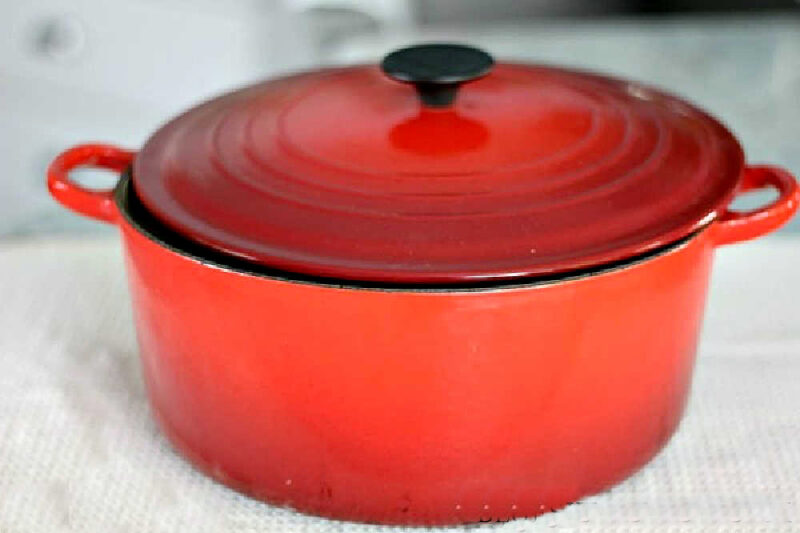
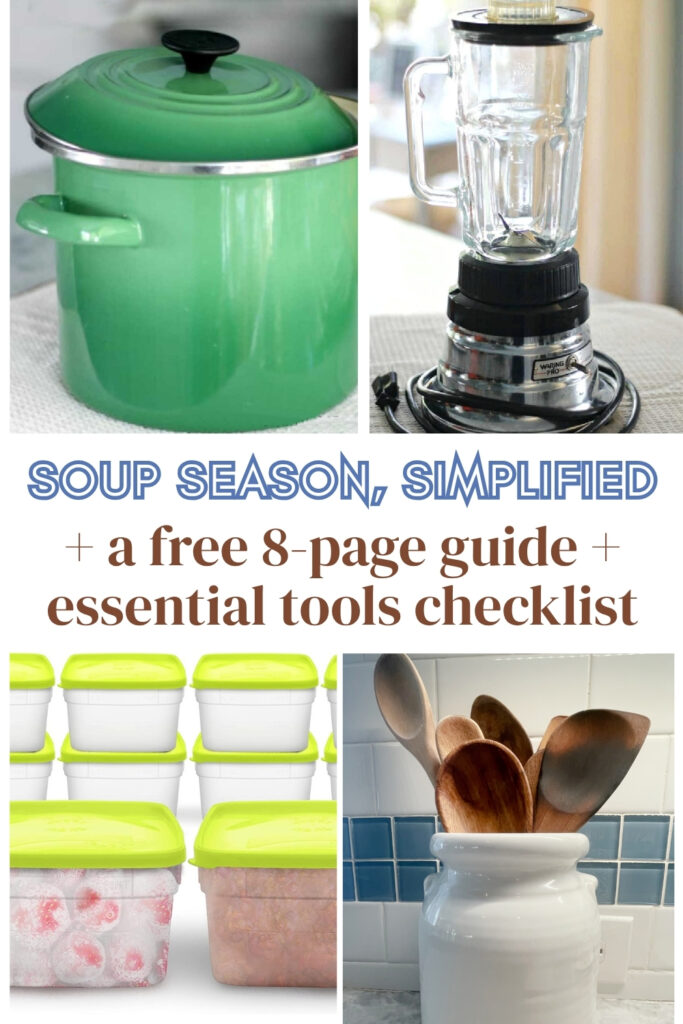
My usual go-to soup pot is one of my Le Creuset Dutch Ovens. They are heavy-duty, clean up in a snap, and cook evenly at low temperatures for long periods. This color is one of the originals – Red. Most of my pieces are in this classic color, but I’ve also added Caribbean Blue and Fennel.
NOTE: Le Creuset periodically updates its color offerings.
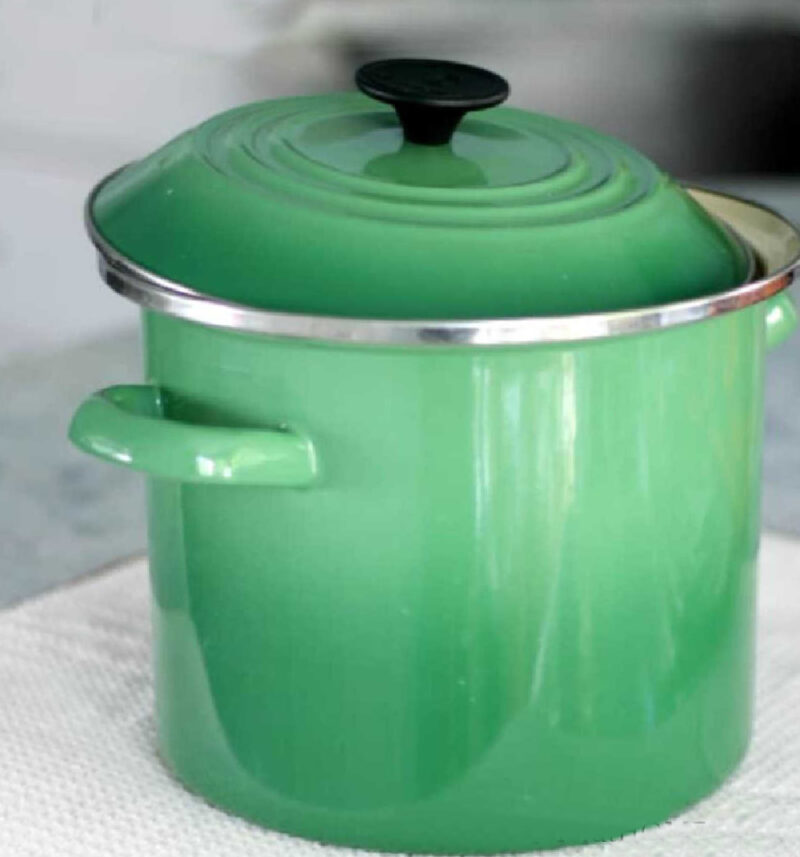
A large stockpot works well, too, though I prefer a wider pot to a tall one. Stirring is easier, I think. This lightweight 8-quart Le Creuset enamel-on-steel stock pot is another favorite. The color is Fennel, but it has been discontinued. Fortunately, like all Le Creuset, it comes in a variety of colors.
How to Choose the Right Soup Pot
If you only invest in one piece of soup-making equipment, make it a good pot. It’s the workhorse of every soup you’ll ever make, and the right one lasts decades. Here’s what I look for.
Size. For a family or for leftovers (and soup is made for leftovers), aim for 5 to 7 quarts. That’s roomy enough for a double batch without boiling over. If you regularly cook for a crowd, an 8-quart stockpot earns its shelf space.
Material. My heart belongs to enameled cast iron – my Le Creuset Dutch ovens hold heat beautifully, cook low and slow without scorching, and go from stovetop to table looking gorgeous. The trade-off is weight and price. A quality stainless steel stockpot is lighter, more affordable, and heats up faster, though it won’t hold a gentle simmer quite as evenly.
Shape. I prefer a wider pot over a tall, narrow one. Stirring is easier, and vegetables brown better when they’re not crowded.
My honest advice: if a Dutch oven is a stretch right now, don’t let it stop you. A solid budget-friendly stockpot will make wonderful soup today, and you can add the investment piece down the road.
2 – An Immersion Blender
Many vegetable-based soups, such as butternut squash and potato, as well as cream soups (cream of broccoli, cream of mushroom, cream of cauliflower), benefit from puréeing. It’s hard to get the silky-smooth texture that makes these soups so appealing without a blender or an immersion blender.
Many soups, such as vegetable, minestrone, or chicken noodle, do not require puréeing.
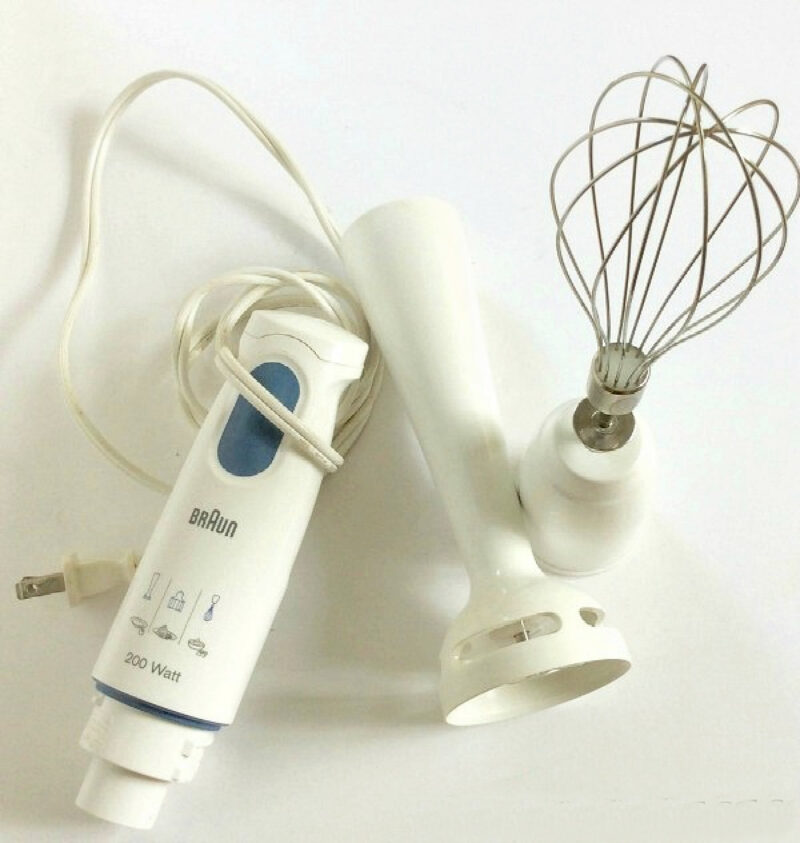
An immersion blender lets you purée directly in the soup pot. There are several brands on the market, and they all come with different attachments, like one for puréeing and one for whisking – which is great for making whipped cream.
What Can You Make with an Immersion Blender?
Besides the soup, you can make:
- whipped cream
- vinaigrettes
- mayonnaise/aioli
- salsa
3 – A Blender
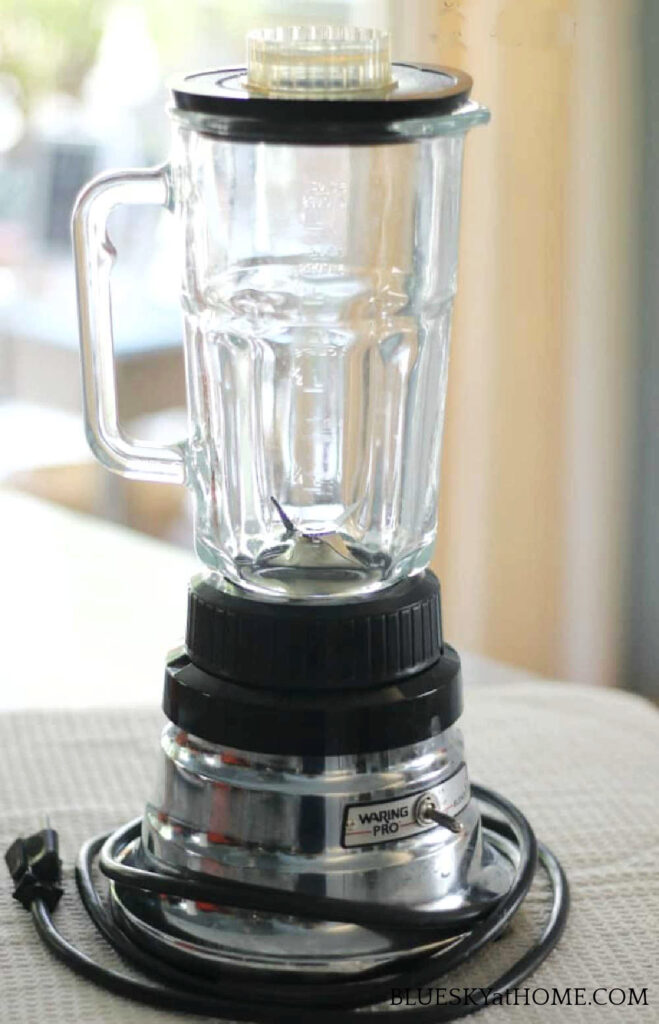
A blender will give you a smoother result than an immersion blender, but you do have one more appliance to clean. My blender is a Waring, and I love its high-low-off switch and big jar.
NOTE: Don’t waste your money on blenders with multiple settings. The only settings you need are off, low, and high.
What Can You Make with a Blender?
A blender can be a workhorse in the kitchen.
- pesto
- salsa
- smoothies
- pancake batter
- crepe batter
- purée vegetables and fruits (I made tomato jam in mine.)
- cocktails (piña coladas, for example)
- nut butters
- compound butters
- coulis
- hummus
Immersion Blender vs. Regular Blender: Which Do You Need?
This is the question I hear most, so let me save you the debate: you don’t need both. Here’s how to decide.
Reach for an immersion blender for convenience. You purée right in the pot – no ladling hot soup into a blender jar in batches, no extra dishes. It’s my everyday pick for butternut squash, potato, and cream soups. It’s also inexpensive and stores in a drawer.
Choose a countertop blender if texture is everything to you. It gets soups truly silky-smooth in a way an immersion blender can’t quite match. If you already own a good one, you may not need to buy anything at all. The downside is the extra cleanup and working in batches with hot liquid (fill the jar only halfway and vent the lid – a lesson I learned the messy way in my teaching days).
Bottom Line: For most home cooks, an immersion blender is the smarter first buy if you have a limited budget or storage space. If you’re a texture perfectionist or already have a blender you love, you’re set.
One Other Consideration: If holding the immersion blender stick and a bowl would be a physical challenge, a blender is your better option.
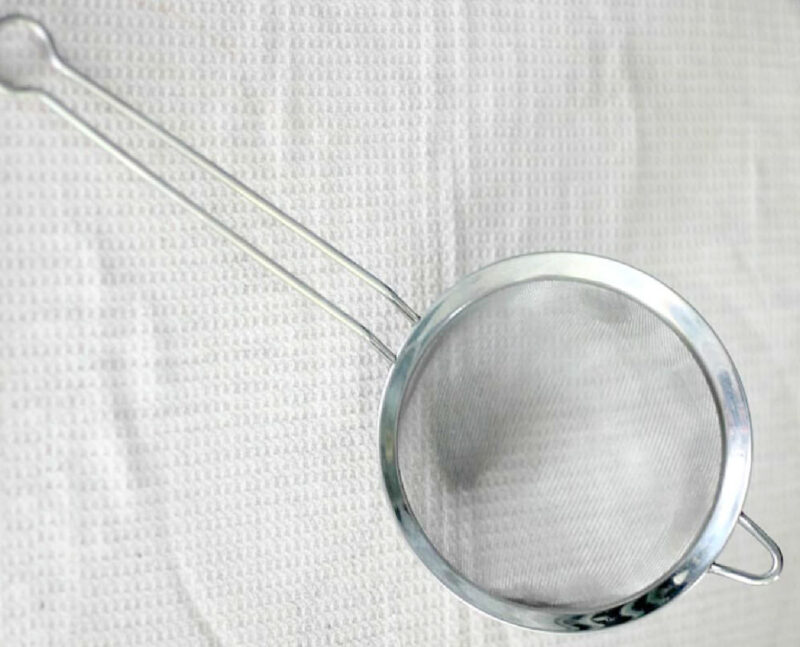
4 – Fine Mesh Sieve
If you don’t have a blender or an immersion blender, a fine-mesh sieve also helps you achieve the smooth texture so sought after in a cream or puréed soup. It will take more elbow grease and take longer, but it can work.
Fine mesh sieves come in several sizes and can also be used to sift flour or separate solid ingredients from liquid ones.
5 – Ladles
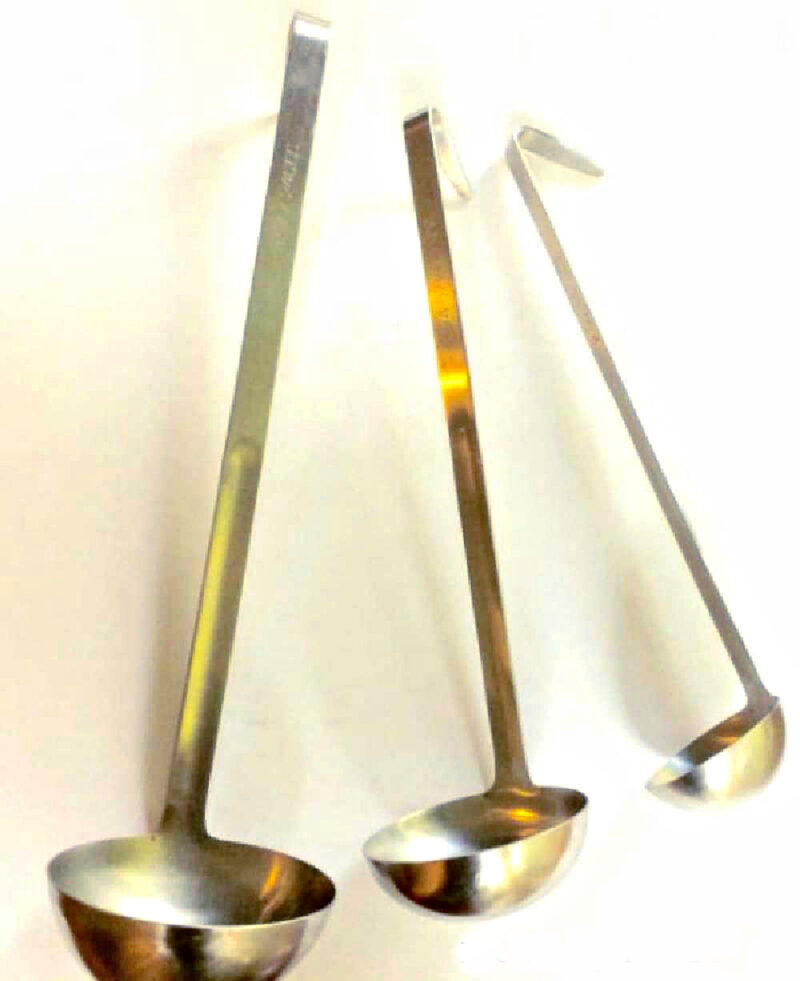
One of the essential ingredients in most soups is stock and one of the easiest ways to measure your stock into the pot is with a ladle.
Ladles come in standard sizes (1/8, 1/4, 1/2, and 1-cup) so you know exactly how much you are adding to the soup. It’s one of the easiest ways to add more liquid when you need to thin the soup to the right consistency.
For adding soup to a serving bowl, a ladle is the best way to avoid spills and to know exactly how much soup you are serving – especially helpful if you are keeping track of serving amounts and calories.
For example, if a recipe yields 2 quarts of soup, that’s 64 ounces. That will give you 8 8-ounce (1-cup) servings or 16 4-ounce (1/2 cup) servings. Using a ladle is the easiest way to give you the amounts you need.
6 – A Big Wooden Soup Spoon
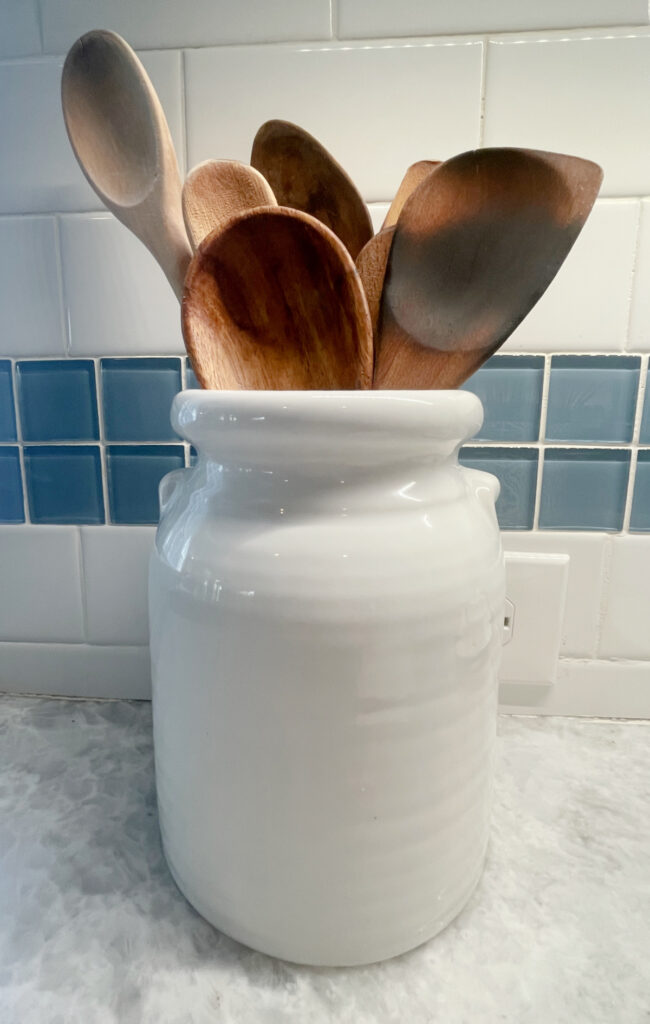
Soups have to be stirred during all steps of preparation. I don’t think anything works better than a good old-fashioned wooden spoon. It’s easy to hold and easy to clean – just don’t put it in the dishwasher. My favorite one belonged to my mother; it must be 50 years old. It may be discolored, but it still works and has more memories than you can shake a stick at.
7 – Don’t Forget Storage: The Bonus Tool
Here’s the tool nobody mentions until they’re standing over a pot of leftover soup with nowhere to put it. Since soup practically begs to be made in big batches, good storage is what makes all that effort pay off during a busy week.
A few things I’ve learned to keep leftovers at their best:
- Storage containers should have tight-fitting lids, especially if you plan to freeze the soup.
- Choose freezer-safe containers in single- or family-size portions, so you can pull out exactly what you need. Wide-mouth glass jars and stackable containers both work well – just leave room at the top, because soup expands as it freezes.
- Label everything with the name and date. Trust me, every frozen soup looks identical at 6 p.m. on a Tuesday.
- Cool soup before refrigerating or freezing to protect both the texture and your other frozen food.
Reheat on the stovetop over low heat, and a batch you made in October tastes just as comforting in January.
Your Complete Soup-Making Supply Checklist
Here’s everything on the list in one place, so you can see at a glance what’s already in your kitchen and what’s worth adding. Print it, screenshot it, or tuck it on your shopping list:
- A big pot – the essential foundation (Le Creuset Dutch Oven or the 8-quart enamel on steel stockpot)
- An immersion blender – for puréeing right in the pot; make sure you get one with a blender and a whisk attachment
- A countertop blender – for the silkiest texture (optional if you have an immersion blender)
- A fine-mesh sieve – for smooth soups the no-appliance way, plus everyday sifting and straining
- Ladles – in graduated sizes for measuring stock and serving
- A large wooden spoon – for stirring through every step
- Freezer-safe storage containers – for stashing all those good leftovers (more on this below)
- A sharp chef’s knife and a good wooden cutting board – for prepping all those vegetables at the beginning of any soup recipe
- A fat separator – optional – for skimming fat from homemade broth (nice to have)
That’s the whole soup-making supply list – most of it, I’d bet, you already own.
Why Soup Really Does Taste Better the Next Day
You’ve probably noticed that many foods, including soups, taste better after spending the night in the refrigerator. Do you know why? Back in culinary school, I learned there’s real science behind it.
As the soup cools in the fridge, its flavors literally redistribute: salt, acids, and other soluble compounds spread out and even themselves throughout the pot, so every spoonful tastes more balanced.
At the same time, proteins and starches slowly break down into simpler, more flavorful building blocks, which is why yesterday’s soup tastes richer and rounder. And absorbent ingredients like potatoes, beans, and pasta soak up that seasoned broth overnight, so they end up flavored from the inside out.
The takeaway for your kitchen? Don’t be afraid to make soup a day ahead. A night in the fridge isn’t just convenient – it’s doing delicious work while you sleep.
The same process is true for stews and dishes like osso buco, pot roast, coq au vin, and beef bourguignon.
Shop the Tools You Need to Make Soup


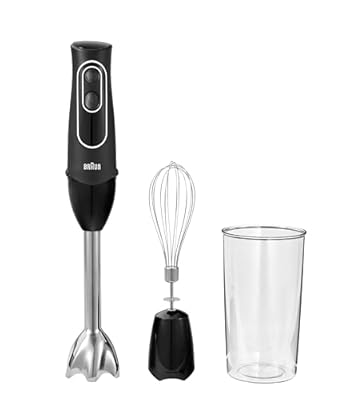


I bet you already have some of these tools in your kitchen. When I gather my soup ingredients (mise en place), I also gather the tools I need at the same time, which makes prep easier and more efficient.
All Soup Tools Questions Answered
The truth is, you need surprisingly little. A big, heavy-bottomed pot – a 5-to-7-quart Dutch oven or stockpot – is the one true essential; everything else just makes the job easier. An immersion blender or jar blender, a fine-mesh sieve, a good ladle, and a sturdy wooden spoon round out the kit. Most home cooks already own nearly all of it.
For most families, a 5-to-7-quart pot is the sweet spot – big enough for a double batch and plenty of leftovers without risking a boil-over. If you regularly cook for a crowd, size up to an 8-quart stockpot. Whatever you choose, look for a heavy bottom so your soup simmers gently instead of scorching.
No – plenty of soups are chunky and never see a blender. But for smooth, creamy soups like butternut squash or potato, an immersion blender is the easiest tool for the job, because you purée right in the pot. No immersion blender? A regular countertop blender works too, or a fine-mesh sieve for the old-fashioned method.
Beyond the pot, just a few simple utensils make all the difference: a big wooden spoon for stirring, a ladle (or two, in graduated sizes) for measuring and serving, and a fine-mesh sieve for straining broth or getting a silky texture. That’s really all the soup utensils most cooks need.
Absolutely. If you have a pot and a spoon, you can make soup tonight. The tools on this list simply make the process smoother and the results better – but none of them are deal-breakers. Start with what’s already in your kitchen and add pieces like an immersion blender as you go.
Because the flavors keep working while it rests. As soup cools in the fridge, salt and other soluble compounds redistribute evenly, proteins and starches break down into richer-tasting building blocks, and absorbent ingredients soak up the seasoned broth. The result is deeper, more balanced flavor – which is why making soup a day ahead is never a bad idea.
Cool your soup, then transfer it to freezer-safe containers in single- or family-size portions, leaving room at the top for expansion. It keeps about 3 to 4 days in the fridge or up to 3 months in the freezer. Label everything with the name and date – every frozen soup looks identical come Tuesday night.
Now that you know the essential tools for making soup, how about some awesome soup recipes?
Get Your Guide to Soup Essential Tools
GET YOUR SOUP ESSENTIAL TOOLS GUIDE and CHECKLIST.
That’s my list of essential soup-making tools. What’s yours? Do you have any other soup-making tools? If you do, please PIN IT. Check out these Pinterest Boards: Soup Recipes and Cooking Lessons.
Let the soup-making begin.



I love soup and you shared a couple of items I need to get for the next time we have soup night. Thanks for sharing the list. #HomeMattersParty
So happy to help, Donna.
Soup is a great fall and winter comfort food for sure. My favorite is French onion, but I prefer to go out for it! lol Your list, I’m sure, will come in very handy for your readers:) Thanks for sharing at Vintage Charm — hope to see you there at tomorrow’s party as well:) xo Kathleen |Our Hopeful Home
Carol, thank you so much for all the soup recipes and soup chart! Still making only soup for Wild Bill with a broken jaw!
Mary, still suffering from the broken jaw! Oh my, that seems like a long time. Hope he can eat turkey by Thanksgiving.
I don’t have an immersion blender and I regularly find recipes that call for one. Might put that on my Christmas list.
Stacey, if you have a blender, you are good to go for pureeing a soup, but the immersion blenders are really convenient. And they are relatively inexpensive.
I did Julia’s French Onion again last night and pleased to say I have all those tools — and used all but the blender and sieve!
Jeanie, since French Onion isn’t a pureed soup you wouldn’t need the blender, but it sure is nice to have around for all sorts of things. Frozen margaritas and pina coladas!