
How to Brine a Turkey in a Cooler for the Juiciest Thanksgiving Bird
Wondering if brining a turkey is worth the effort? The short answer: absolutely. A properly brined turkey delivers juicy, flavorful meat from edge to edge, no more dry breast meat while you wait for the dark meat to finish cooking. Stick with me and I will show you how to brine your turkey in a cooler, and why you should.
If you are hosting Thanksgiving this year, I want to give you plenty of lead time to consider the method, gather your supplies, and maybe do a test run on a roasting chicken first.
When I taught cooking classes, “how do I brine a turkey?” topped the list of holiday questions every November. Students were curious but skeptical, so I would demonstrate on a large roasting chicken. Then they would taste the difference: meat so moist and well-seasoned it practically melts in your mouth, with skin that crisps beautifully in the oven. That taste test turned every skeptic into a believer.
The second-most-asked question was always “why should I brine a turkey?” The science is simple: salt water helps the turkey hold on to moisture during roasting while seasoning it from the inside out. It is not complicated, but it does take a little planning ahead.
The third question was “what equipment do I need?” Happily, just a couple of things, and my secret weapon is a large cooler or ice chest.
I no longer teach cooking classes now that I write Bluesky at Home, but I still brine every Thanksgiving turkey. Let me walk you through exactly how to brine your turkey in a cooler with ice, why it works, and how to fit it into your holiday timeline. Once you see how easy it is, it will become part of your tradition too.
Once you’ve brined a turkey a few times, this method, especially my little secret of brining a turkey in a cooler, will be your go-to practice. You’ll be a convert. I promise.
I recommend you read my post, 10 Safety Tips for Preparing Turkey. It’s really important. I would PIN it.
But let’s talk turkey – specifically, brining that bird in a cooler.
This post contains affiliate links to products used to create this project. If you should order any item from this site, I may receive compensation, but you do not pay a penny more. Your purchase is greatly appreciated as it helps support the continued publication of this site.

Why You Should Brine Your Turkey
Brining is the single best thing you can do for a moist, flavorful bird. As the turkey soaks in salted water, it absorbs moisture and seasoning all the way through, so it roasts up juicy instead of dry. After fifteen years of teaching cooking, this is the step I never skip, and once you taste the difference, you will not either.
Brining changes the structure of the meat’s muscle tissue, allowing it to swell and absorb water and flavorings. It also breaks down the proteins, making the turkey more tender. This means that the result is a juicier bird despite the moisture loss during roasting and the long cooking time.
One of my favorite resource books for years has been Michael Ruhlman’s Ratio: The Simple Codes Behind the Craft of Everyday Cooking. He explains that “turning salt into liquid makes it an especially effective tool because it touches 100% of the food’s surface in a uniform concentration. The brine can actually carry flavors into muscle.” That’s why many brining solutions include herbs and flavorings.
Advantages of Using a Cooler for Brining
The main logistical problem with brining is finding a container large enough to submerge your turkey in brine but small enough to fit in your refrigerator. From a food safety standpoint, a container holding a turkey in brine should be stored on the lowest shelf of the refrigerator so any spills won’t contaminate the food below.
You may use a stockpot, a bucket, or a roasting pan. The challenge is that most fresh turkeys are too big. Who has room in their refrigerator during Thanksgiving for a container to take up an entire shelf?
I discovered years ago that an ice chest (cooler) is ideal. Since the garage is colder than the kitchen, we put the cooler there overnight.
- Coolers are relatively inexpensive and can be used for many years.
- When not in use, you can store coolers in the garage or another out-of-the-way place.
- Coolers come in many sizes to fit your turkey.
- Most coolers have handles, making it easy to move your turkey from the garage or another outdoor space to the kitchen.
- You can easily sanitize coolers after use for brining.
- Coolers don’t take up any space in your fridge.
The key rule is simple: the turkey must stay cold, below 40˚F. the entire time, so check the ice and add more as it melts.
NOTE: To plan your Thanksgiving preparation, plan on brining overnight, roughly twelve to twenty-four hours. Work backward from when you want to serve your turkey to determine when to start the brining process.
Steps to Brine Your Turkey
- As normal, allow time to thaw your turkey.
- Remove the turkey from its packaging.
- Remove giblets, neck, and other internal organs.
- Prepare your brining solution.
- Place a large turkey brining bag in the clean cooler.
- Place the turkey in the bag.

- Add the brining solution (see below), making sure that the turkey is submerged in the brining liquid.
- Secure the bag tightly. Use a strong twist tie.
- Pack the cooler with ice. I buy a 10-pound bag at the grocery store. If you have leftover ice, use it on Thanksgiving for icing down wine, water, or sodas.

- Close the cooler and leave overnight, checking occasionally to see if you need to add more ice. (This depends on how cold it is in your garage; if you live in a warmer climate, bring the cooler inside.)
- Turn the turkey over once or twice.
I set up my turkey in the brine in the cooler in the evening on Thanksgiving Eve.
You get a good night’s sleep while Tom Turkey absorbs all that awesome brining liquid and gets all moist and plump.
After Brining the Turkey
- Remove the turkey from the brine.
- Wipe the turkey with damp paper towels and then pat dry with more towels.

- Place the turkey on a platter or in a large baking dish and refrigerate until you are ready to roast it. This step will help the turkey skin be crisper.

What to Do with the Cooler After Brining
Once the turkey has been removed from the cooler, take these important steps:
- Discard the ice and the turkey brining solution from the cooler.
- Discard the brining bag in the trash – be careful not to drip brine on the floor.
- Sanitize the inside and outside of the cooler with a bleach solution and wipe with paper towels.
- With the cooler lid open, let it dry thoroughly.
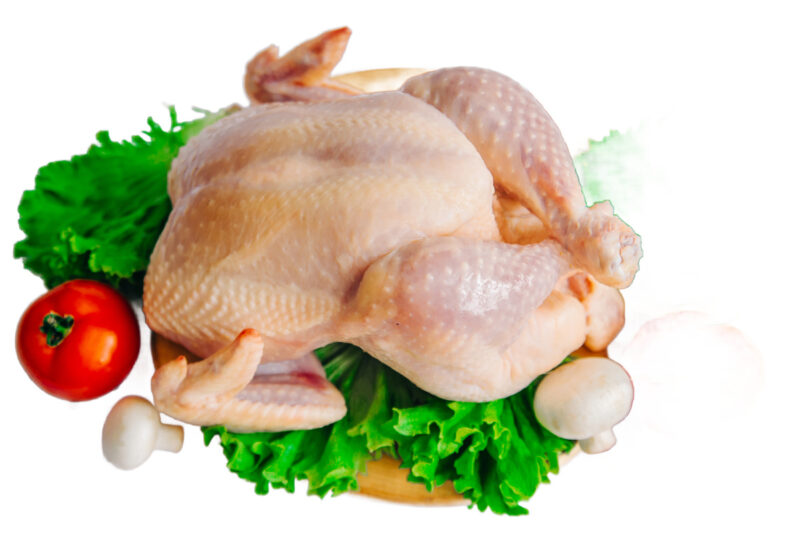
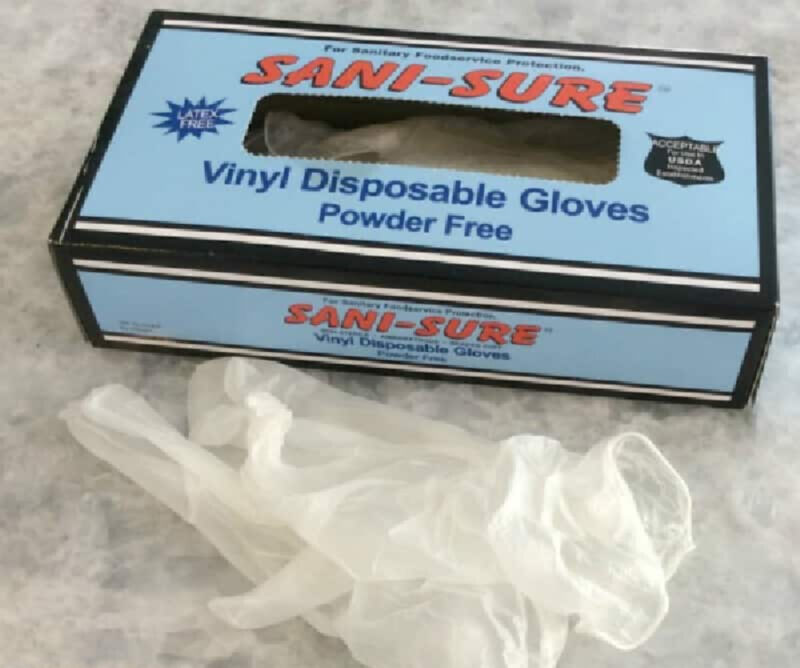
TIP: Wash your hands before and after handling the turkey, the brining solution, and the cooler. I encourage you to grab a box of disposable gloves at your local restaurant supply store or online to wear while preparing the turkey for brining and cleaning the cooler. The gloves add an extra level of protection.
Brining Solution for Your Turkey
Many turkey recipes use brining solutions. Scientifically, you only need water and kosher salt. You may add other ingredients to enhance flavor, but they are not necessary.
I always use good old Morton Kosher Salt. Different salts have different weight and volume, so I recommend sticking with Morton’s for this recipe.
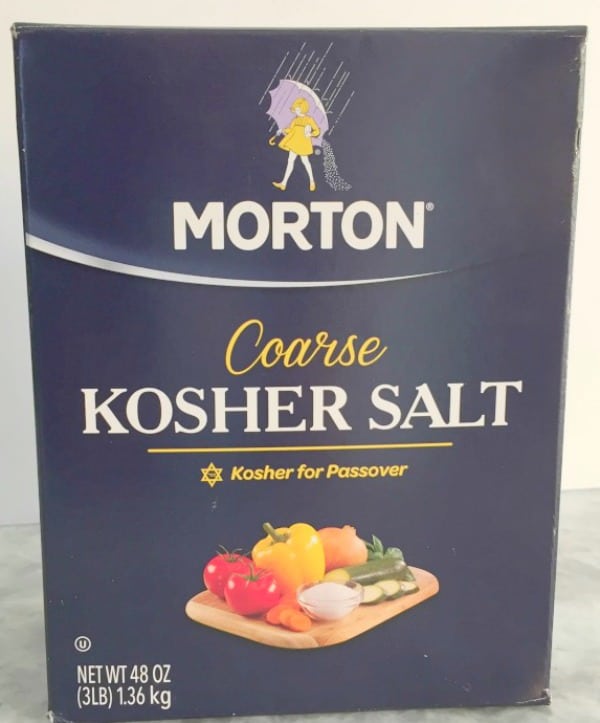
The basic ratio for turkey brine is 1/2 cup of kosher salt to 1 gallon of cold water (1 cup salt to 2 gallons water for a large turkey). Some brine recipes include sweeteners or acidic ingredients (lemons) to balance the saltiness.
Trust Me: you will not taste any saltiness in your turkey.
A couple of years ago, I decided to add sugar to the brine, just for fun. I added about a cup of granulated sugar. Sweet Shark thought it was the best turkey I had ever made.
*UPDATE: I made a sugar water combination (simple syrup) first by combining 1 cup of sugar with 2 cups of water in a saucepan. Stir over medium-high heat until the sugar is dissolved. Let it cool completely (drop in a few ice cubes if you are in a hurry), then stir it into the brine mixture.
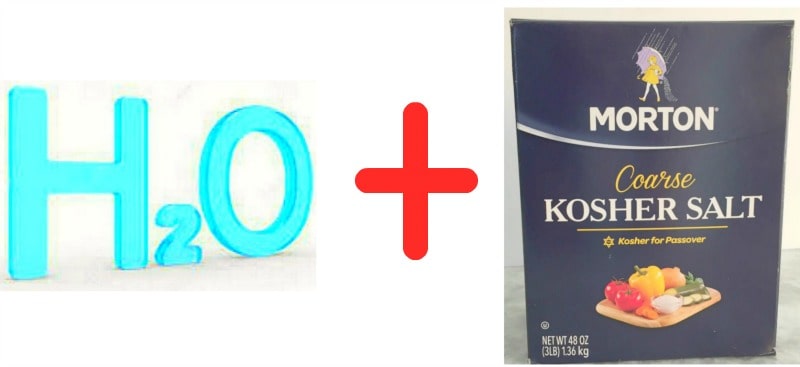
Here’s the basic “recipe” with some flavoring options. Adjust the ingredient amounts based on the size of your turkey.
Turkey Brining Recipe
Turkey Brining Solution

Equipment
- large food-safe brining bag
Ingredients
- 1 cup Morton kosher salt
- 2 gallons cold water
- 10 pounds ice
Optional Flavor Additions
- ½-1 cup sugar, granulated or brown
- 2 lemons quartered
- handful herbs, such as rosemary, thyme, parsley, sage
- 3 bay leaves
- 5 garlic cloves, peeled and smashed
Instructions
- In a large container, combine the Morton kosher salt and water.
- Stir until the Morton kosher salt is dissolved.
- If adding sugar, combine it with 2 cups of water in a saucepan. Stir over medium -high heat until the sugar dissolves. (Drop in a few ice cubes if you want to speed up the cooling process.) Stir the sugar water into the brine mixture.
- Add the brine solution to the turkey in the food-safe brining bag set in the ice chest. Be sure that the turkey is completely covered in the bag. You can double the brining solution or add additional water.
- Tightly tie the brining bag closed and cover it completely with ice. Close the ice chest and place it in a cool place. Periodically check that the ice chest is still cold and add more ice if needed. You can turn the turkey over once or twice. Allow the turkey to brine overnight.
- Remove the turkey from the brine solution. Discard the brine solution, any herbs, and the brining bag. Thoroughly sanitize the ice chest with a bleach solution.
- Pat the turkey dry with paper towels. Place on a platter in the refrigerator uncovered for a few hours until ready to roast. (This will help make the turkey skin crisper.)
Not much effort for an extra juicy, moist turkey on Thanksgiving. Try it, and you’ll thank me.
Your Questions Answered about Brining Turkey
Yes, and it is one of the easiest methods when fridge space is tight. Use a brining bag, keep it packed with ice, and make sure it stays below 40˚F. the whole time.
For a wet brine, about twelve to twenty-four hours is the sweet spot. Longer than that, and the meat can get too salty. Work backward from when you want to serve your turkey to determine when to start brining.
Either works, but most people do not have space in the fridge. Using a well-iced cooler eliminates that challenge.
A common ratio is about 1/2 cup of kosher salt per gallon of water.
Absolutely. It is the difference between a dry bird and a juicy, well-seasoned one, and it takes very little hands-on time.
For more cooking information and seasonal recipes, check out these Pinterest Boards (and follow me on Pinterest): Cooking Lessons, Thanksgiving Recipes.

While your turkey is brining, you should make this amazing Pecan Rum Tart and toast the turkey with the Perfect Pumpkin Martini.
I hope that everyone has a wonderful Thanksgiving and safe travels. May your turkey be juicy and your pie sweet. So you don’t panic the day before Thanksgiving, PIN this information for later.










Hi Carol,
We have been featuring your very helpful How To Brine A Turkey this week at Full Plate Thursday, 769. Thanks so much for sharing with us and come back to see us real soon!
Happy Cooking
Miz Helen
Thank you so much for featuring this post. It’s very helpful for folks who don’t know the process. Happy Thanksgiving to all your community.
My pleasure. I hope you had a wonderful Thanksgiving and your turkey was delicious.
This was the easiest brine recipe we have ever used.
Hi, you can buy 5 gallon buckets at Lowe’s and Home depot that are food grade. Don’t forget the lid.
Ken, that’s not a bad idea. But the cooler has worked so well over the years, it would be hard to change now.
How long to you leave it in the refrigerator after brining?
As soon as I remove the turkey from the brine and dry it, I put it into the refrigerator. There shouldn’t be any issue with leaving it in the refrigerator for several hours.
I’m giving this a try this year! But I’ve always cooked my turkey in an electronic roasting pan. How do you cook yours after it’s been brined? Breast side up and uncovered?
Chris, I’ve been brining my turkey for years. It makes a big difference in the moistness of the turkey. I don’t know what an electronic roasting pan is. I always roast the turkey, breast side up, basted with butter, uncovered. When the turkey cooks to a golden brown, the last 30 minutes, I cover it in foil. Hope that helps.
In one place you say 1/2 cup of salt to 2 gallons of water, then in the list its 1 cup to 2 gallons.
Rich, use 1/2 to 1 cup of salt, depending on the size of your turkey. If it’s a really big turkey, you may need more water.
Rich, sorry for the typo. The ratio is 1/2 cup salt to 1 gallon of water. The post has been updated now.
I can’t wait to try brining my turkey this year. You provided some good tips, I.e.,
putting the turkey in a plastic bag in a cooler etc. overnight sounds much easier!
Flo, you’ll love your brined turkey. The cooler is the ticket to easy brining.
I’ve done this for years as well. I use a paint bucket lined with a roasting bag to brine the turkey vertically. It fits in the frig, easier than you think, and with the top on you have a shelf for storing the pie overnight. I use less salt than your recipe as many turkey suppliers (especially of frozen turkeys) use added salt in their processing. However it is done, brining is the only sure fire way to ensure moist turkey for not only the holiday meal, but for leftovers too.
Carole, I always order a fresh turkey so I don’t think there is added salt, but that is a good idea. Love that we are on the same turkey page. Happy Thanksgiving.
If you google it about using a garbage bag they say do not use a garbage bag at all! So why does this recipe say you can?
Because I’ve done it for years with no negative effects. We use a new white bag. The bags at the grocery store are usually too small. If you can find a brining bag large enough for your turkey, then I would use it. Hope that helps.
thanks for sharing the great information I believe it will com in handy in the future
come see us at http://shopannies.blogspot.com
Angie, you are so welcome and I’ll definitely drop by.
We were just talking about where to put the turkey when brining it this year so thanks for the cooler suggestion. Happy Thanksgiving, Carol!
I didn’t realize the importance of brining. Love the idea of putting the turkey in a cooler. I never would have thought of that. Thanks for sharing at Inspired by You. I pinned it to our group board. Have a wonderful Thanksgiving and please check back on Friday to see if you have been featured and visit us again next Sunday.
Susan thanks for your feedback. Brining is easy and the results are so worth the little extra effort. I hope you have a juicy turkey.
Well, I have never done this but want to give it whirl. Should the turkey be thawed first? How many days can I wait to cook it after removing it from the brine and placing it in the refrigerator? Thanks!
Cecilia, first, the turkey should be 90% thawed. It will finish thawing overnight in the brine. You could leave it uncovered in the fridge for 1 day at most. I put ours in the fridge as soon as it’s out of the brine and dried. It’s in there for a few hours. I take it out while the oven is preheating. Hope that helps. Happy Thanksgiving.
Can I put it in a large pot for brining and keep it in the refrigerator till it’s ready to be cooked?
Yes, as long as there is plenty of room for the turkey, brine and ice. Hope that helps.