
How to Use Lamps in Your Home Decor
I have a thing for lamps. There’s nothing like a beautiful accent lamp to add architectural features to a room — and as we head into spring, I’ve been thinking about how much a lamp can do to shift a room’s entire mood for the new season. This post focuses on how to use lamps in your home decor and shares key elements to consider when decorating with lamps — including some easy ways to give them a fresh, seasonal update.
Many types of lighting designs are needed in our homes, such as recessed lighting, overhead lighting, and task lighting. Those all fill a practical need. But as the days grow longer and natural light floods back into our rooms, lamps take on a new role — layering softer, ambient light alongside all that beautiful spring sunshine.
Lighting design is a major component of interior design. Lamps act like jewelry on a lovely black dress. And just like swapping a chunky winter necklace for something delicate and fresh, switching up a lampshade or styling a new vignette around your lamp base is one of the simplest ways to participate in a spring refresh — no painting or redecorating required.
Why do we love lamps? From a design standpoint, lamps:
- add warmth
- add color
- add shape and texture
- add decorative interest
- create focal points
Since lamps are so important in our home design choices, here is a guide for using lamps in your home decor — plus ideas for updating older lamps to feel right at home in a spring-inspired space.

Lamps for the Seasons
Like throw pillows and seasonal wreaths, lamps can be treated as a rotating accessory in your decor — swapped or restyled to reflect the season’s mood.
For Fall and Winter
Just as our homes take on a richer, deeper color palette in the cooler months, lamps can also contribute to that seasonal vibe.
- Think lamps with warm, rich bases: deep bronze, aged brass, dark ceramic, or rich wood tones.
- Pair them with shades in cream, taupe, or even a soft plaid or linen texture to echo the cozy, layered feeling of the season.
- Table lamps with a heavier, more substantial base feel grounded and warm when the days get shorter.
For Spring and Summer
For the warmer seasons, lighter and brighter takes over. Longer days may mean that lamps are less of a practical accessory and more of a decorative addition to our home.
- Consider bases in white ceramic, pale rattan, woven seagrass, soft blush, or sage green.
- Use materials and colors that feel airy and fresh.
- A crisp white drum shade or a natural linen shade keeps things light.
- Coastal-inspired lamps in driftwood or sea-glass tones are perfect for summer, while floral-painted ceramic bases or soft pastels shine in spring.
The beauty of this approach is that you don’t have to redecorate an entire room — simply swapping a lamp or two can signal a whole new season.
Ideas for Using Lamps in Your Home
Regardless of the season, lamps can be used for different purposes and specific tasks.
- reading or task lamps
- accent lamps can be purely decorative.
- ambient lighting
- fill an empty corner of a room, such as distinctive floor lamps
- create a focal point
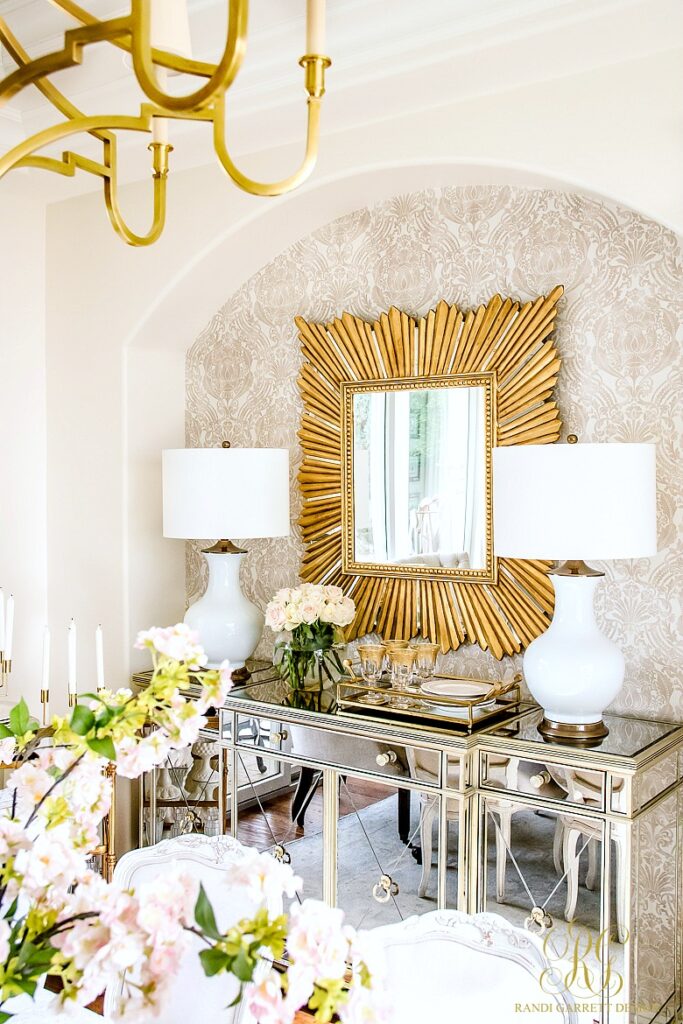
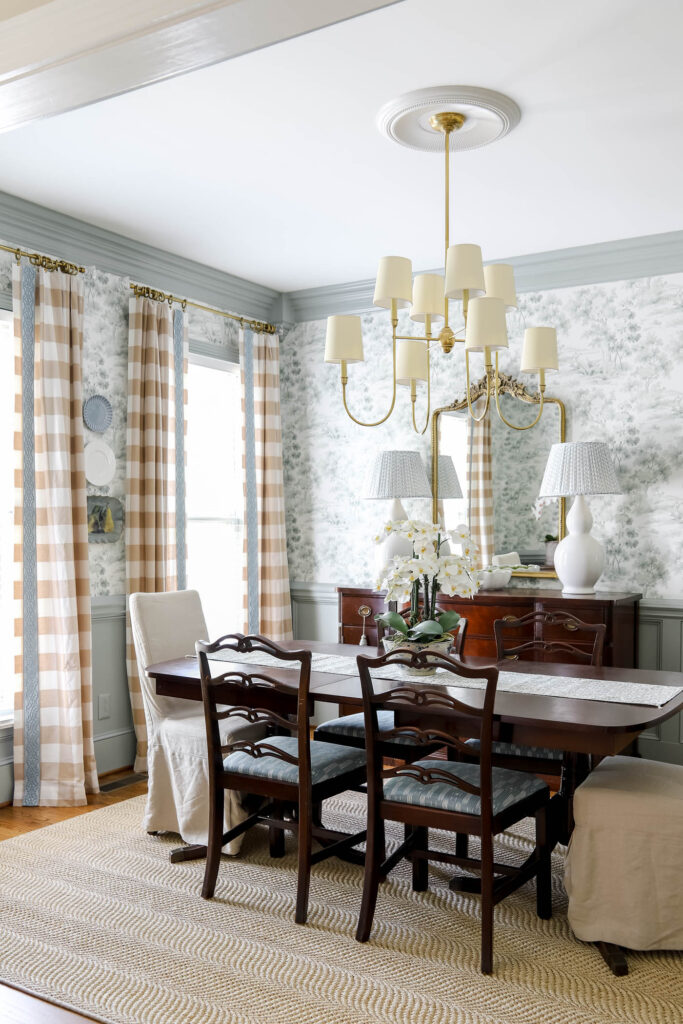
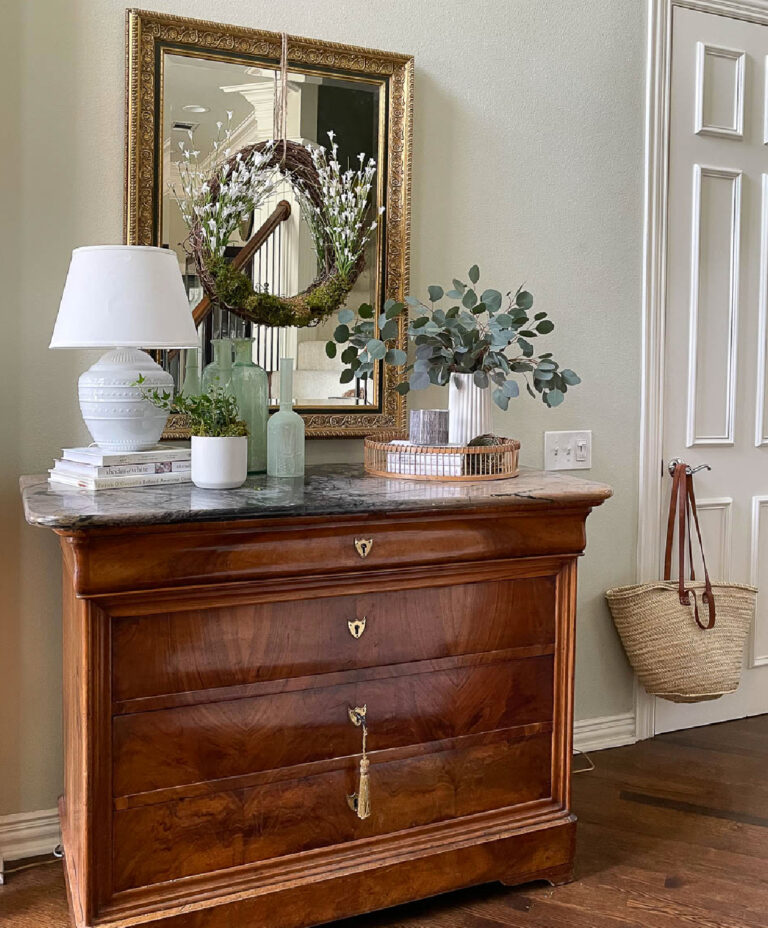
In the example below, the large white ceramic lamps not only fill the space, but also balance the gold mirror and contrast with the metallic finish of the frame.
Where to Add a Lamp
Lamps can be used in almost any area of your home.
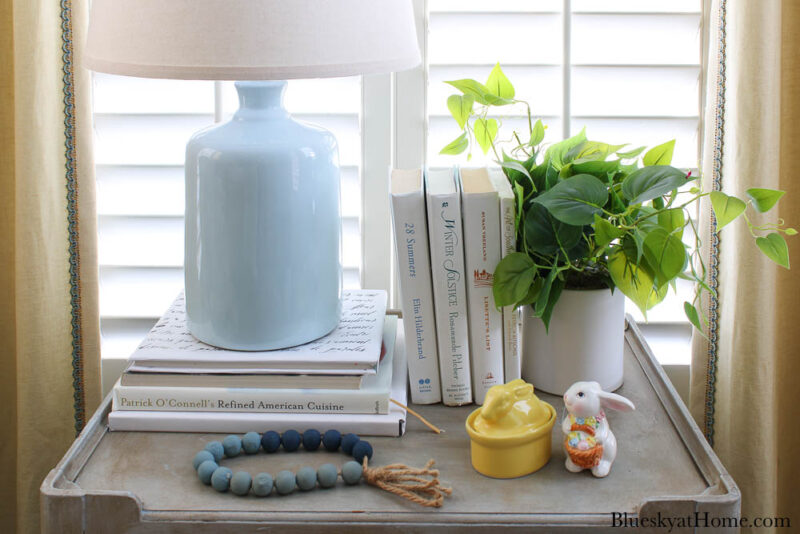
- living room – end tables, side tables, sofa table
- study or home office – on a desk or by a reading chair
- dining room on a console table or buffet
- bathroom vanity
- bedrooms on bedside tables
- entryway console table table
- kitchen counter as an accent lamp
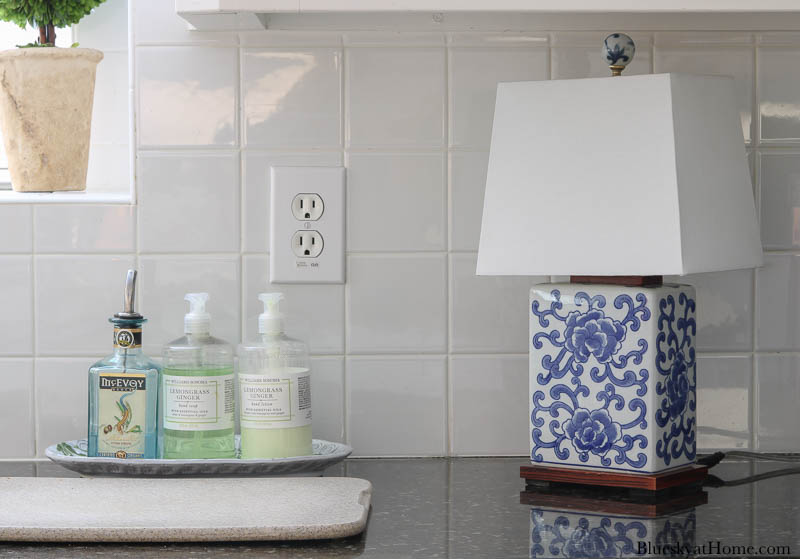
Using Lamps in Your Home
Are there some dos and don’ts when using lamps? Of course. Here are some guidelines.
Size and Placement
Ideally, lamps shouldn’t be too small or too large for their intended space.
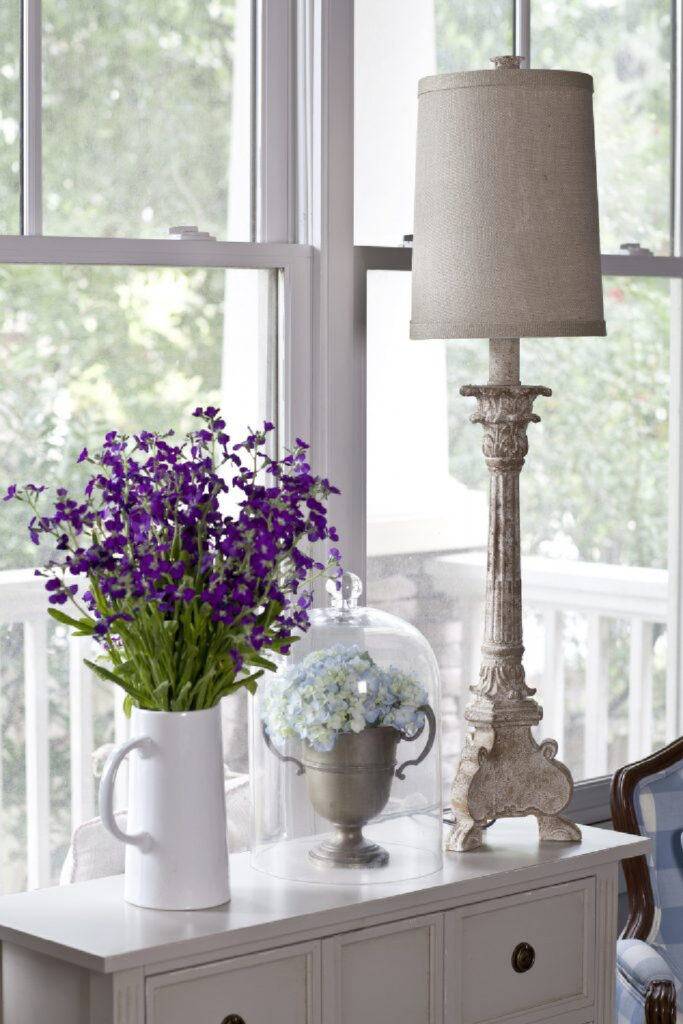
Consider where a lamp will sit. If it’s on a large table or sideboard, then the base size should be ample. You don’t want a lamp that is too small on a large base, or it will be lost.
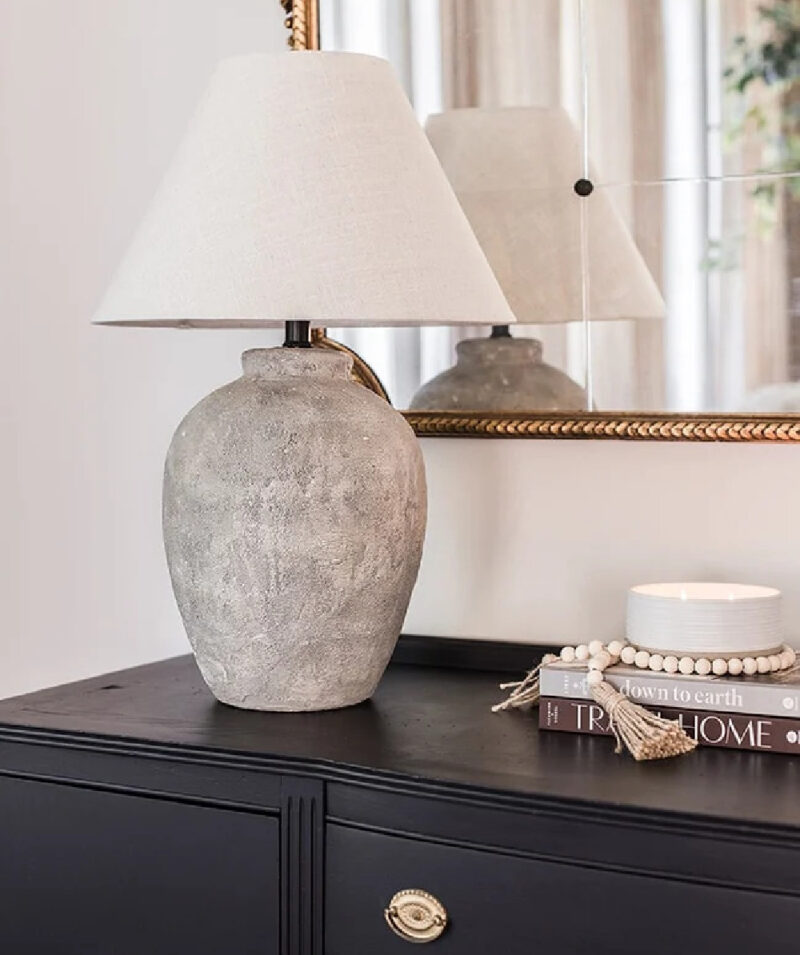
On the other hand, if the surface is small the lamp base should be smaller. If your surface is narrow, like a console table, buffet or sofa table, then the lamp base should be narrower. If the lamp is on a narrow surface, a large round lampshade would not work.
Rooms with tall ceilings can handle taller lamps. Typically, buffets or credenzas can handle taller, but slimmer lamps.
Style
Just like our homes in general, lamps come in a variety of styles, from modern to classic, elegant to traditional, farmhouse to rustic.
Although lamps can certainly provide an opportunity to add a pop of contrast, we shouldn’t go so different in style from the rest of our furnishings that they have an “out-of-place” or jarring effect.
Lamps in the same style as our room, but using different materials, such as wood, ceramic, or metal, can add interest and cohesiveness without “going off the reservation”.
NOTE: One lamp or two? Matching or not? On a buffet, credenza, console table, or two nightstands or endtables, matching lamps provide balance and symmetry. Lamps on side tables or one table next to a chair or between two chairs stand on their own.
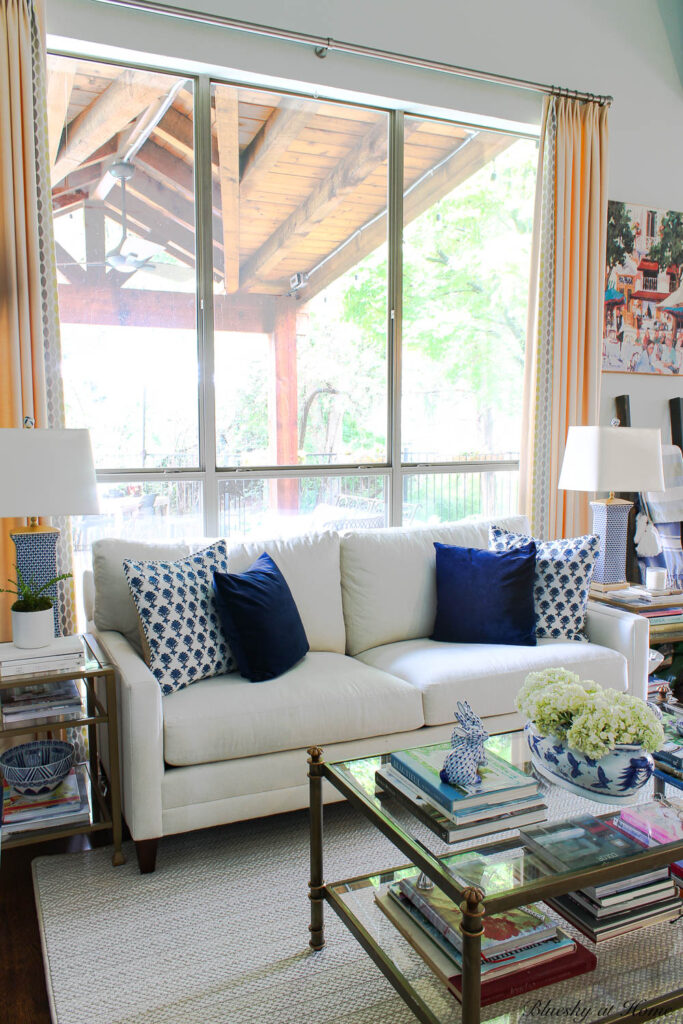
NOTE: Don’t hesitate to move lamps you have to other rooms. They may function better in a different room.
Lampshades
Probably, nothing updates or dates a lamp more than a lampshade. Traditionally, lamp shades come in shades of white and beige cloth, but now they are found in colors, patterns, and different materials, such as rattan, metallic, rope, ruffles, and pleats.
White shades will allow the maximum light to come through, which is important if the lamp is used for reading. For accent lamps, you have more flexibility.
Lampshades can also have trim, from elaborate trim and braid to tassels. This look is more classic, dressy and elegant.
TIP: Spring and summer are great times to switch out lampshades from dark to light.
Rules of Thumb for Using Lamp Shades
Lamp shades come in different shapes, from round (drum), square, rectangle, or conical (the top is narrower than the bottom). When choosing or creating a DIY shade, consider where the lamp will be placed, the size of the base, and the style you want.
- Proportion – the bottom of the shade should be wider than the widest part of the base. The vertical height should be about half the height of the base.
- Coverage – the shade must cover the lamp’s hardware. If necessary, replace the harp – the metal piece that attaches to the lamp and holds the lampshade. Even a half-inch adjustment can make a significant difference.
- Shape – a drum or rectangular shade pairs well with a geometric base for a modern look. A conical shape suits a traditional lamp, such as a ginger jar or candlestick base. A drum shape evokes a modern vibe.
- Materials – fabric with a looser weave, like linen or cotton, feels more informal than a smooth material like silk or paper. Every shade in a room doesn’t need to be the same type (unless they are clearly a pair). Fabric that is stretched over the lampshade frame emits more light than a lampshade that is made of pleated fabric, plastic, or laminate.
- Pattern – a solid lampshade complements a base with an intricate pattern or details, colors or finishes. Conversely, a simple solid base can handle patterned shade.
Light Bulbs
Finding the right shade of light bulb for a particular area of your home can make a huge difference in the feel of your room.
Even the most beautifully designed rooms will look unbalanced if they are poorly lit.
How to purchase the right type of light bulb for a lamp?
First, determine the primary functions of each lamp. Did you know that task lighting should generally be three times brighter than ambient lighting?
Secondly, decide on the desired color temperature for your lighting.
Light bulbs now come in several shades from warm to cool. Consider where your lamp will go and what its purpose will be.
- lower temperatures are warm and yellow
- higher temperatures are closer to blue daylight
- mood lighting is typically created by using a balance of multiple softer light sources in the same room
Do you want to create a cozy and welcoming environment? Then warm light bulbs should be your choice.
Also, consider the wattage. Lamps in dining rooms, bedrooms, or accent lamps need lower wattage, such as 40-watt.
In areas where more light is needed, such as for reading, then 60 – 100 watts is good.
Try different watts in lamps and see what works best.
I’m all for 3-way lamps. I look for that feature when I’m shopping for lamps. If possible, add a dimmer switch to accent lamps.
For a neutral light, consider LED bulbs. They may be more expensive, but they will last much longer than traditional bulbs.
NOTE: Keep the color of the lampshade in mind when choosing a light bulb color. A blue shade over a bulb with a yellow warm white bulb will look more green.
Use Your Creativity: Make Over a Lamp
Do you need to breathe new life into your lamps or lighting fixtures? Are you on a budget?
Next time you begin shopping for a new lamp, consider one that can be updated.
Where can you find old lamps to update at affordable prices?
- estate sales
- flea markets
- antique malls
- Facebook Marketplace
- thrift store
- resale shops
Updating older lamps you find at an estate sale or flea market can go a long way to give your homes a fresh look.

Imagine taking those old light fixtures or lamp bases and turning them into distinctive pieces that reflect your personal style.
Upgrading your home’s lighting need not always involve a hefty investment in new lights.
Take a look at these 13 best DIY ideas to makeover lamps.
Creatively transforming light sources into focal points can enhance the feel of your home. A simple DIY project not only gives your home a new look, but also keeps used accessories out of the landfills.
If you find a lamp in the style, size, and shape that fits your space, consider purchasing it and painting it. I did that with new lamps when the color didn’t quite fit my space.
When you find a lamp that is the right size and shape, but it looks a little outdated, then consider updating the lamp to one with a color or style you love. I painted two glass lamps for an updated, classier look.

One of the easiest ways to update an old lamp is to paint the base. Matte or gloss paint, depending on your style preference, can instantly change the look of a lamp. Old lamp bases can quickly be transformed with spray paint.
Sometimes switching out the lampshade shape and size can give an older lamp an updated look. A white shade adds a fresh look to any lamp. A drum shape is more up to date than a conical style.
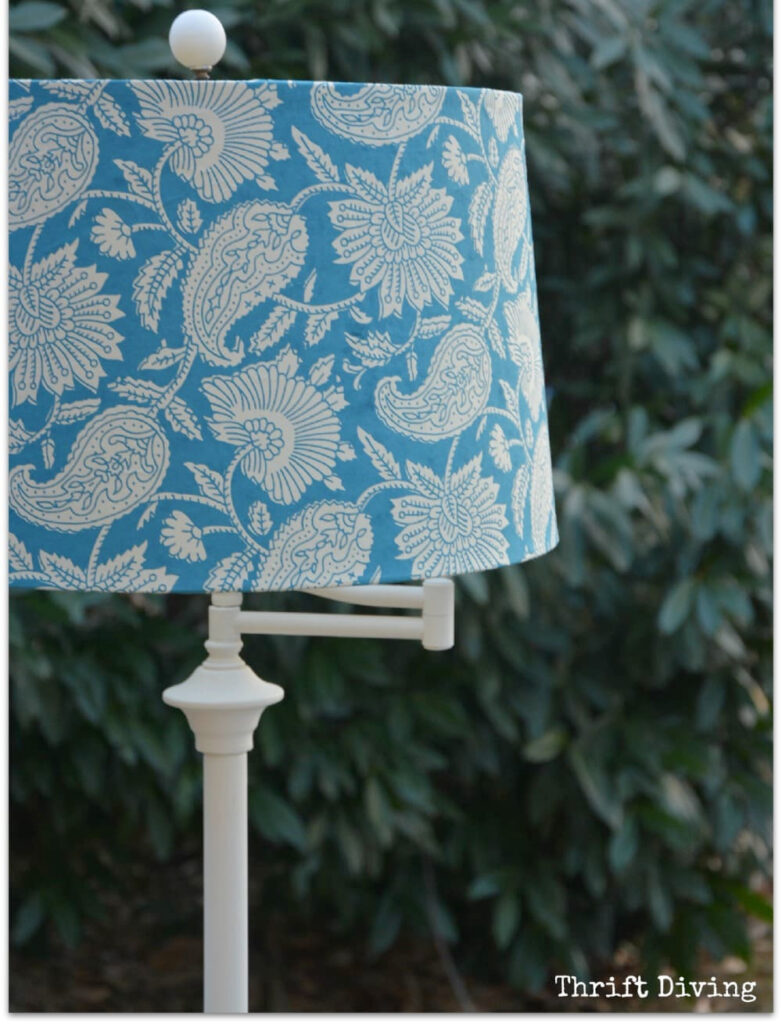
For accent lamps, do something fun and different. I decoupaged a small accent lamp for a colorful, but classic look.

I encourage you to look at the lamps and lighting fixtures in your home not just as sources of light but as canvases for your creativity.
I hope this guide gave you new information for how to use lamps in your home decor.
Here are more ideas for using lamps: 11 Best Tips to Choose and Use Lamps in Your Home Decor.
Always remember that with some paint or a new lamp shade, you can alter not just the brightness but the entire energy and atmosphere of your home. Updating a lamp can significantly impact the brightness of your rooms, as well as the design.
Lamps are one of the best home decor accessories you can have. They are both practical and pretty. Here are some great choices.
For more home decor accessories for the home, check out this Pinterest Board, Accessories for the Home. I’ll be Pinning to this post and I hope you will, too.









I have to chuckle, I’m going downstairs today to make lamps for my dollhouses…LOL. Yes, overhead lighting is icky—-my parent’s home relied on those ugly ceiling fixtures which I always hated, and then they put fans up with lights—WORSE!
I do have a chandy in my bedroom I turn on occasionally, but lamps are essential! Great post, I dont’ think I have seen another===like the short lamp on books…great idea! Sandi
You have some really good ideas here Carol, I love lamps in the kitchen and dining room, a place I think most overlook. I think they add a coziness to the kitchen that makes you want to stay a while. Hope you had a wonderful Easter.
Cara, you are so right about lamps in the kitchen, dining room, even the bathroom. Little accent lamps add such a nice touch.