How to Grow a Beautiful Small-Space Garden (Flowers, Ferns, and Herbs)
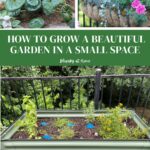
I can’t believe how quickly the season is changing. Our small backyard is ready for planting flowers, greenery, perennials, and annuals. Whether you have a tiny backyard, a narrow side yard, or just a few garden beds to work with, you can create something truly gorgeous. Here is how to grow a beautiful small garden with flowers, ferns, and herbs.
Because we had some chilly days and a somewhat rainy spring this year, we are a little behind in planting our flower pots, planters, and flower beds in the front and backyard. Normally, our planting would have been completed two weeks ago and the flowers would be settling in, filling out, and spreading.
I understand if you also have a small yard and limited space for growing a garden. We do, too. Since that’s not happening quite yet, I wanted to show you how we have planted our backyard over the last few years – including our newest addition: a raised garden bed dedicated to fresh herbs. It has been a game-changer, and I’ll show you exactly how to add one to your small space, too.
I also have several tips for creating a lovely garden in a limited space. After moving thirteen years ago from an acre lot that required a ton of time, effort, and money every spring, we realized that having a smaller yard is much easier on the body and the budget.
Table of contents
- Our Backyard Set Up
- Small Space Gardening
- Let’s Take a Walk Through the Garden – Flowers in Hayracks
- Sun Plants
- Using Vintage Planters
- Our New Elevated Garden Bed Herbs Growing in Planters
- Issues with Our Herb Garden
- Our New Elevated Garden Bed
- Hosta, Ferns, and Leopards – Oh, My
- The Evolution of a Hydrangea
- 10 Tips for Creating a Beautiful Garden in a Small Space
- Frequently Asked Questions About Growing a Beautiful Garden in a Small Space
Our Backyard Set Up
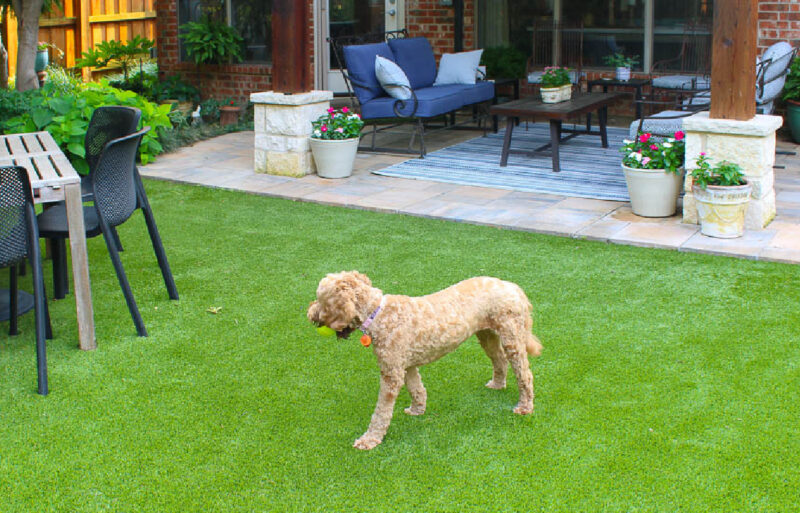
We have a small backyard, and what we do have consists of a small swimming pool, a small grassy area (artificial turf), and two large planting areas. All our flora and fauna come from potted flowers and greenery.
Since we added the artificial turf almost five years ago, the sense of greenery and color has increased 10-fold. The backyard also feels much cooler, even in the heat of summer. Covering up all the concrete hardscape was the best thing we ever did.
On the patio, we plant flowers, such as periwinkles, geraniums, and pentas, in a variety of stone and ceramic planters. We also have three large planters of azealas.
We are 12-14 feet above a mostly dry creekbed. When you look outside from the back of the house, you see the tops of trees, which is a great view. Our backyard, including the pool, is literally held up by a solid concrete wall with 19 steel beams.
Across our backyard is a 4 1/2 foot tall metal fence that is about 70 feet long. Since we love flowers, to have a profusion of color, we have to plant in containers, which means hayracks, metal urns (at one point, we even had a wrought-iron baby carriage), and ceramic and terra cotta pots.
We have used these traditional-looking white planters for the past few years to plant bright pink mandevilla. This is last spring when they were still small. By the end of summer, they are almost as tall as the fence and covered in blooms. They also last through Thanksgiving.
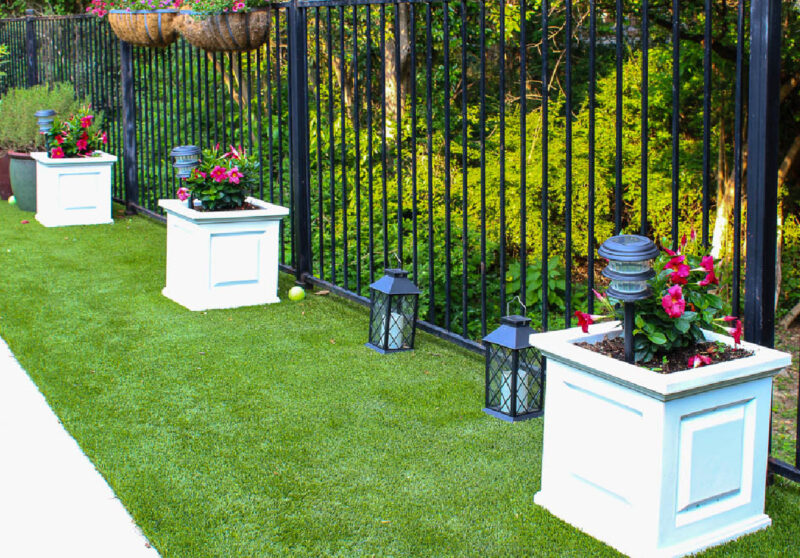
The effect is stunning when you look outside. It’s taken us a few years to figure out how to grow a beautiful garden in a small space, but now we feel like pros.
Container flowers grown in any garden need the right amount of sun and rain (and watering when it doesn’t), and fertilizing.
We rely on the backdrop of trees in the greenbelt (it’s really a dry creekbed) behind our metal fence for greenery, planters and hayracks on the fence for color and the pool for cool blue ambiance.
Small Space Gardening
Normally, I plant our hay racks and planters in mid-April, (as I said earlier, we are late this year) after we are 100% sure that the last frost is over. Every year, we get better at determining the sun requirements for different plants that can be grown in containers.
If you also have a small backyard and limited space for growing flowers, you will enjoy these suggestions for growing a beautiful garden in a small space.
When you are fortunate to have something beautiful to enjoy every day, that’s what you want to do.
I recently spent one morning enjoying the backyard and taking pictures of how the backyard looks this year.
Let’s Take a Walk Through the Garden – Flowers in Hayracks
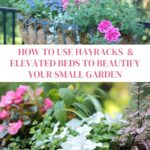
Because we don’t have a place for flower beds across the back of our yard, hayracks are the best way to add plants. Here are some great benefits of using hayracks for planting flowers and greenery:
Space-Saving
- Hayracks mount on fences, walls, railings, and balconies, making them perfect for small spaces where ground space is limited.
- They take up less vertical space, freeing up precious square footage below.
Visual Appeal
- They add a charming, cottage-garden look that is both rustic and elegant.
- When filled with blooms and overflowing, they create a lush, abundant look even in a tiny space.
- They beautifully soften hard surfaces like fences and walls.
Versatility
- Hayracks work with a wide variety of flowers – trailing plants like petunias, lobelia, creeping jenny, and bacopa look especially stunning spilling over the sides.
- They can be mixed with herbs and ferns for a layered, textural look.
- Available in many sizes, so they fit almost any space.
Practical Benefits
- Coco liner inserts retain moisture while allowing good drainage, keeping roots healthy.
- They are easy to plant, maintain, and replant each season.
- Because they are elevated, they can deter some ground-level pests.
Budget-Friendly
- Hayracks are relatively inexpensive and widely available.
- Hayracks will last for years. You only have to replace the liners and potting soil every few years.
- They maximize your planting real estate without requiring major landscaping investment.
Let’s start with the hay racks across our 70-foot-long back fence.
We have 8 – 2 are 36″ long and 6 are 30″ long. All of them are about 8″ deep.
The metal fence in our backyard runs from south to north. Depending on the time of day, from one end of the yard to the other, we have shade to morning sun to filtered afternoon sun to direct sun.
Just so you know, we are in Zone 8.
Shade Plants
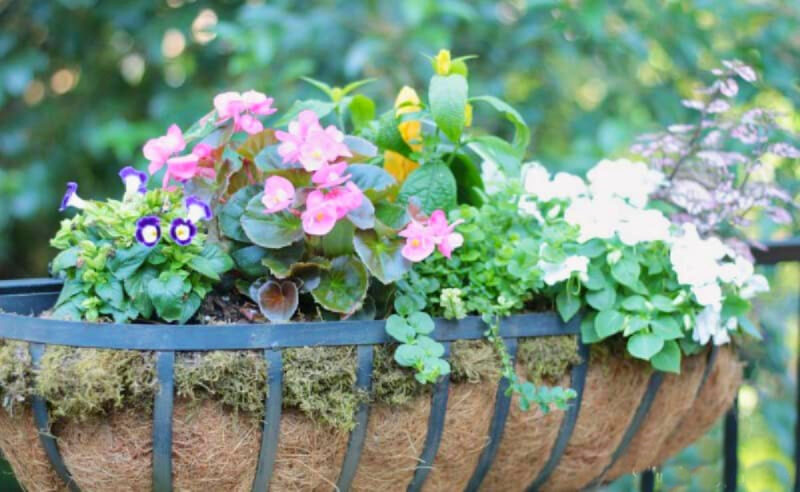
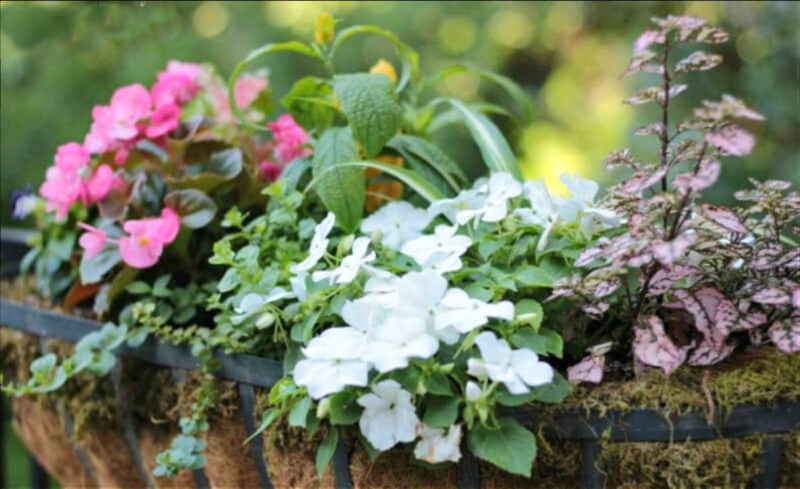
We have to select plants with different requirements. For shade, we use lemon drops, Persian shield, impatiens, caladiums, begonias, torenia, splash and creeping jenny.
Sun Plants
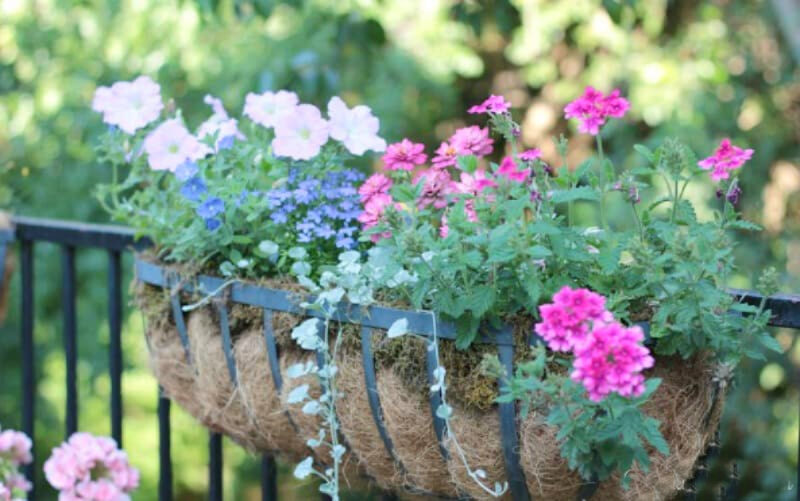
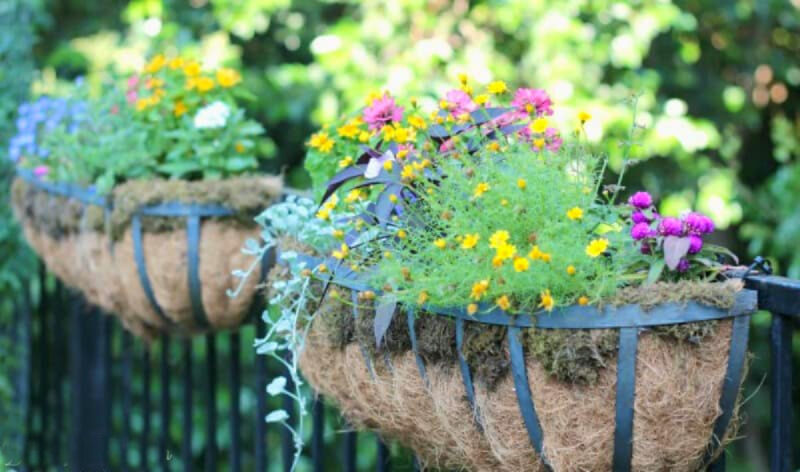
For the sunnier side, I use new wave petunias, dahlberg daisies, melampodium, dianthus, bachelor buttons, million bells, potato vines, gomphrena, and other plants I can’t remember the names of.
Using Vintage Planters
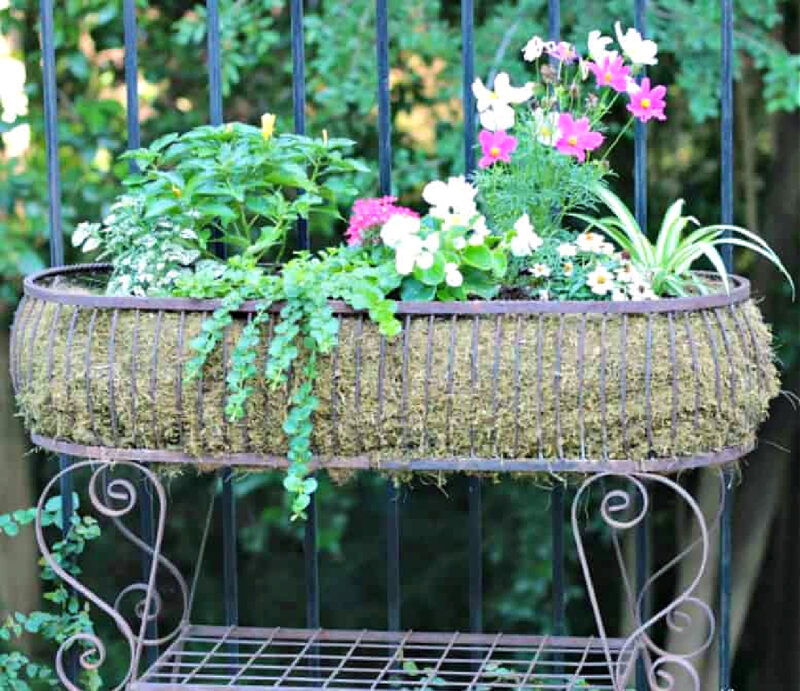
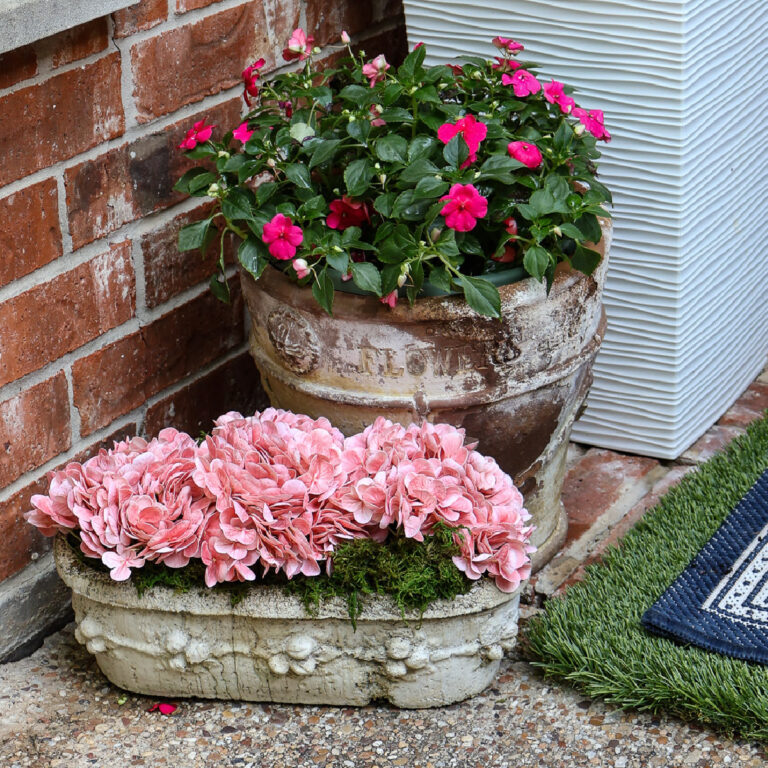
On the wooden fence at the south end of our yard, we have this planter I found at an antique mall in McKinney, Texas. It is filled with morning shade and afternoon filtered sun plants – lemon drop, vinca, Persian shield, and New Guinea Impatiens. I used sheet moss to line the planter.

We have a “baby stroller” that I bought in Fredericksburg, Texas, years ago. I line it with a coconut liner on the inside, then sheet moss and chicken wire.
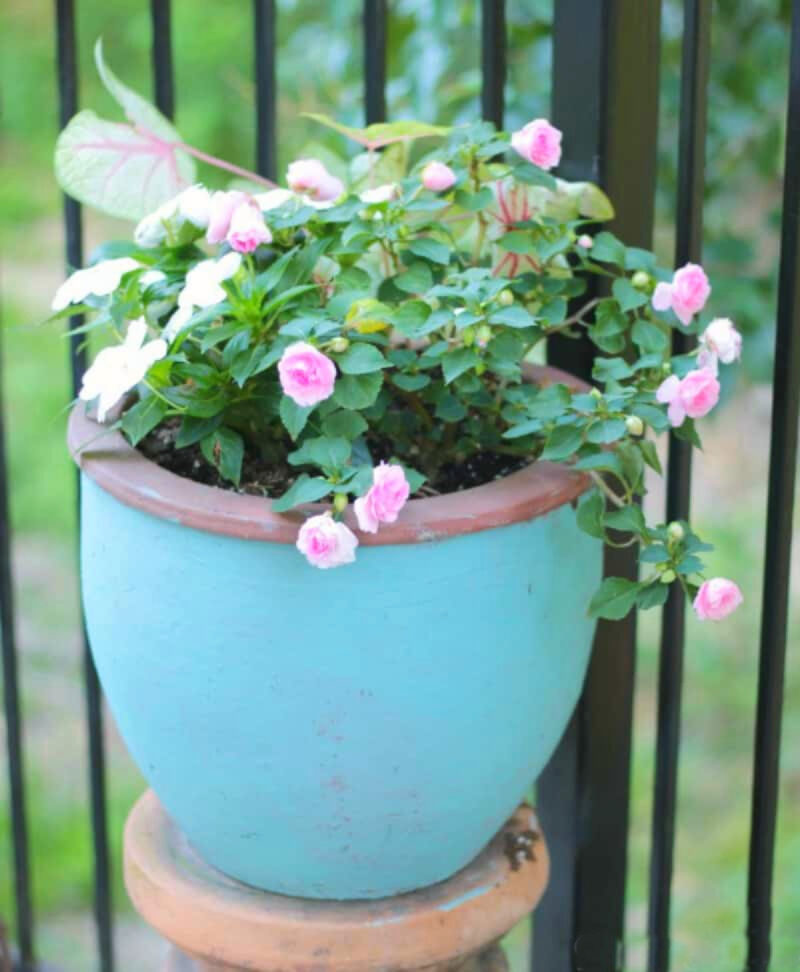
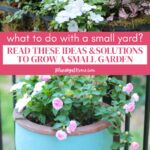
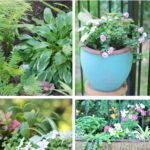
These New Guinea Impatiens, double impatiens, and caladiums do really well in one of the terra-cotta planters that I painted.
Our New Elevated Garden Bed Herbs Growing in Planters
We love growing and having fresh herbs for cooking. It’s so much better and less expensive than buying herbs at the store.
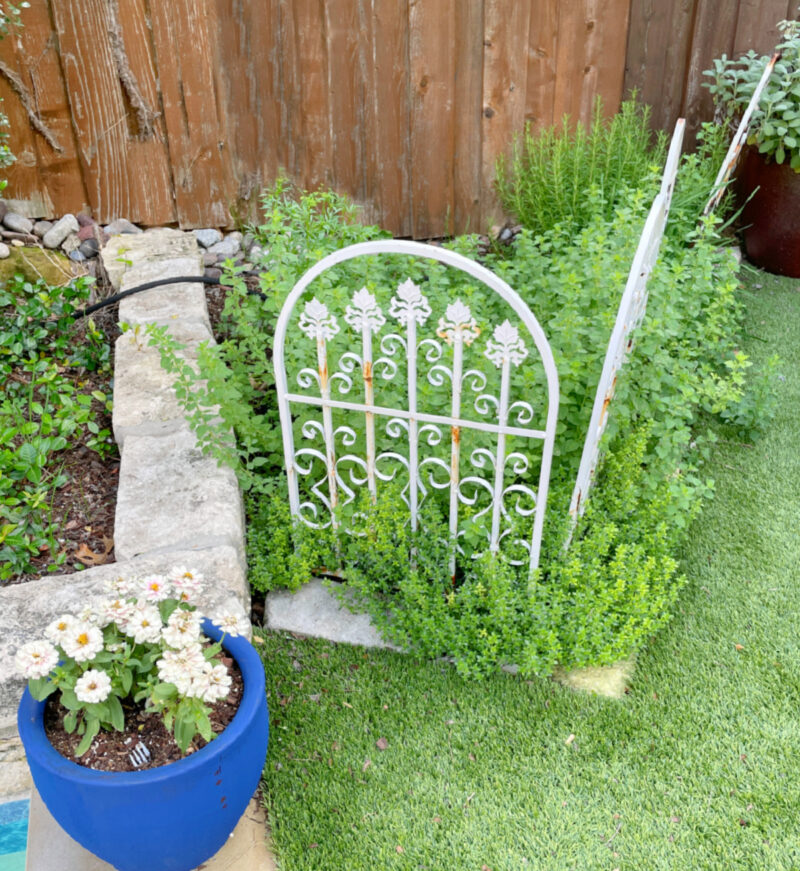
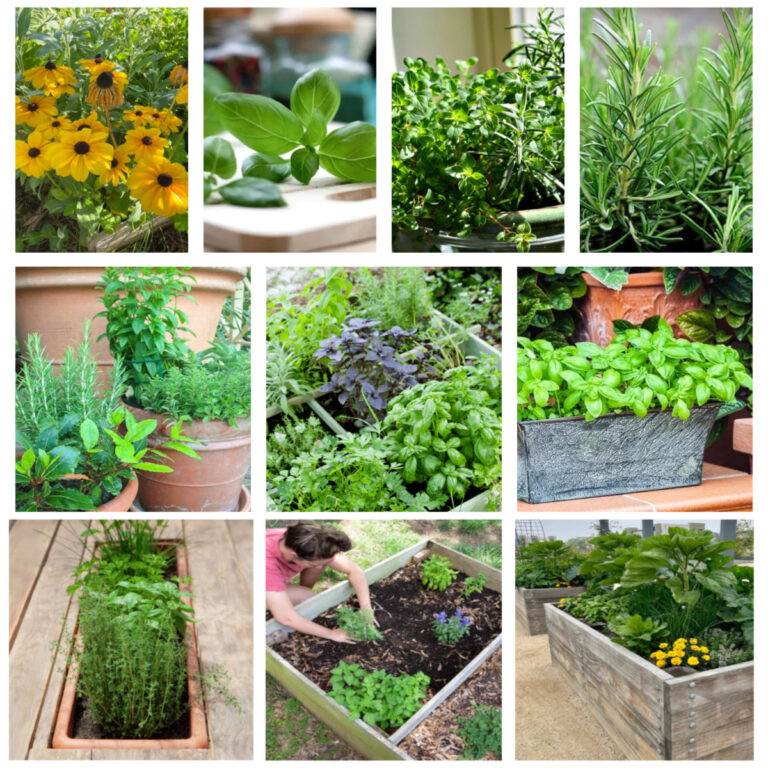
A few years ago, we prepped a small area in the back of the yard to make a new herb garden. This area of the backyard gets enough sun for the herbs to thrive. As you can see, it has become overgrown with oregano, thyme, and parsley. Our sage, rosemary, and mint are in pots.
I found the old garden fencing in Salado, Texas, over 25 years ago.
Issues with Our Herb Garden
Although we love having herbs to use, we do have some issues.
- Unfortunately, as you can see in the picture above, the herbs, especially oregano and thyme, have overgrown our small herb garden.
- The oregano has literally “rooted” into our artificial turf. It’s messy and unseemly.
- Getting to the basil and chives is a challenge, especially if the soil is wet.
- We didn’t want more pots, which would look cluttered in the back corner of the yard.
We didn’t want to give up having an herb garden, but we need a different way to do it.
At this time of year, we have not planted any new herbs. The only things in the herb garden were the overgrown oregano and thyme.
Our solution was relatively simple, but took some time. It wasn’t inexpensive, but we think it will pay off in the long run.
- Remove all the existing herbs and the stones surrounding the herb garden.
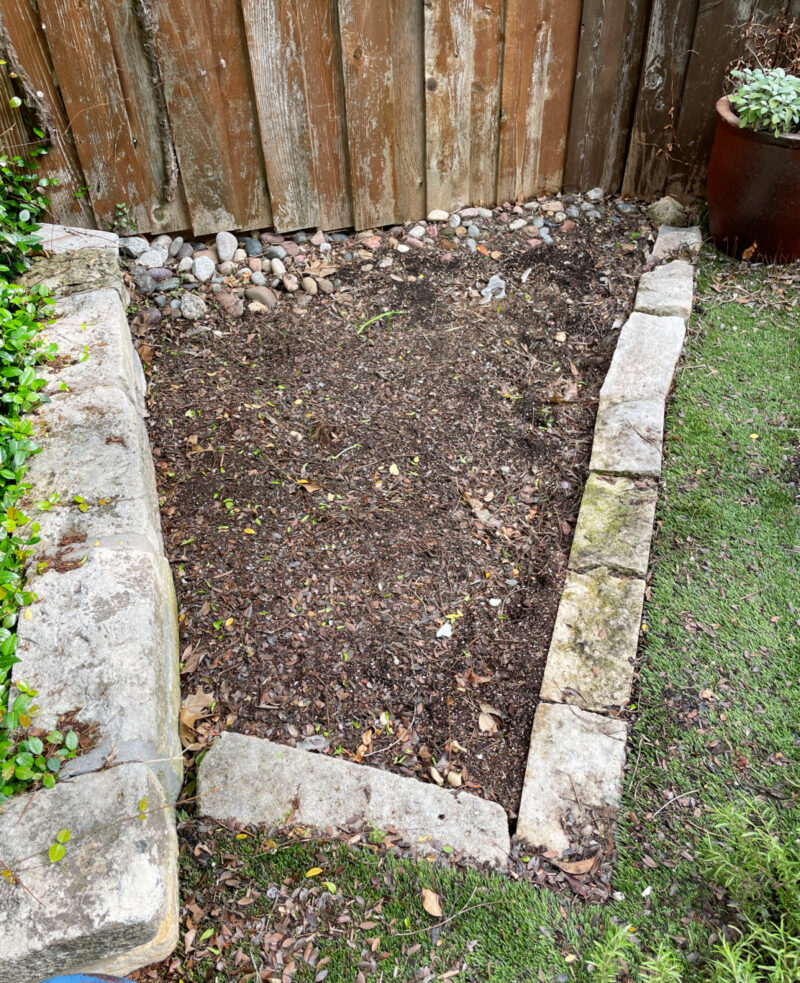
- fill in the space with the same artificial turf from almost five years ago. We called the company we used originally. It took about three hours. They told us that it wouldn’t be a perfect match, but would blend in time.
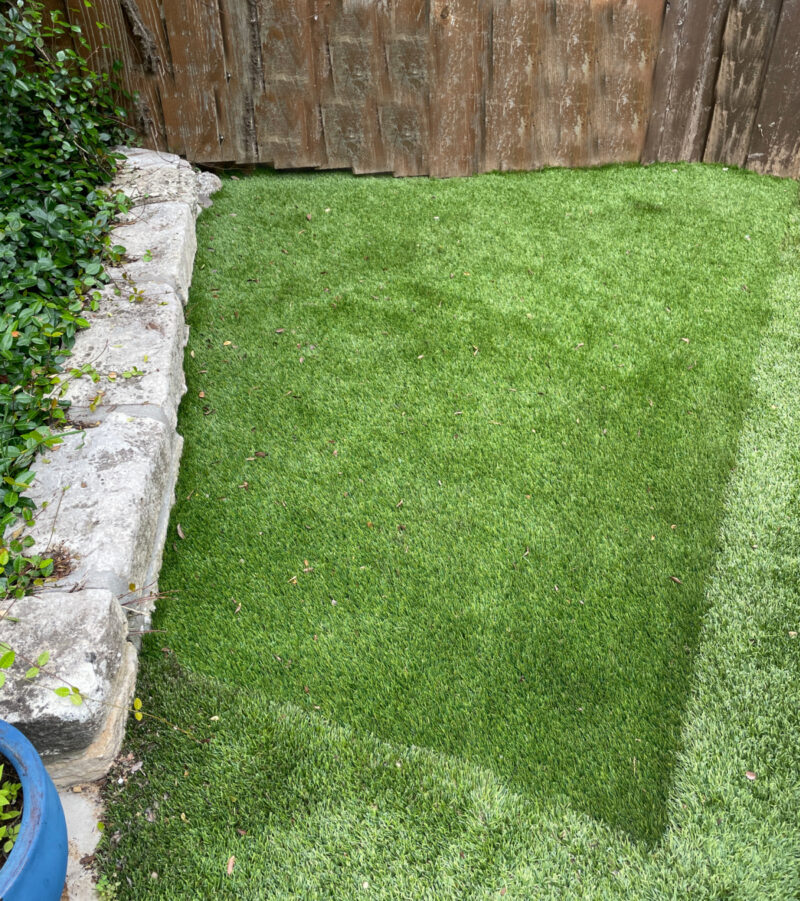
In addition to getting rid of the messy herb garden, we now had a better view in the backyard.
Our New Elevated Garden Bed
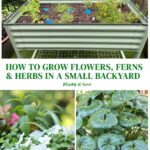
We still needed a place to plant herbs. After seeing a picture in HGTV magazine and doing some research, we decided that an elevated garden bed from Vego Garden was the perfect place to plant herbs.
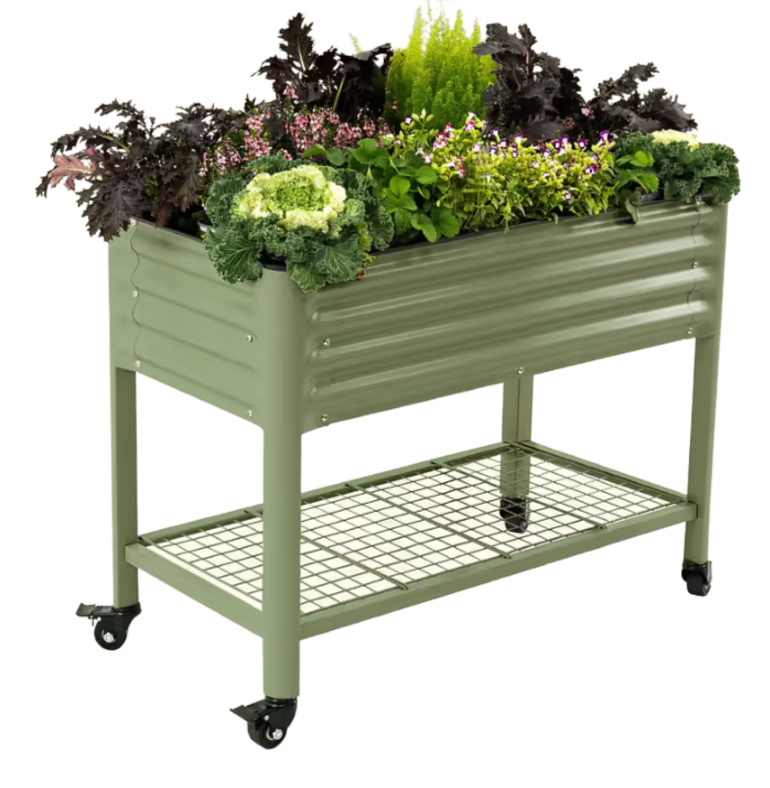
We ordered the 2-foot by 4-foot size.
This solution solved more than one problem:
- It keeps the herbs neat and tidy in a contained space.
- Because it is 36 inches tall, we don’t have to bend over to plant, water, or harvest the herbs.
- It has a water system so that excess water will drain.
- We chose olive green for its aesthetics, and it looks great.
- We chose to add wheels so we can move the garden bed to adjust to changes in sunlight during the summer.
The garden bed does have to be assembled. If you have ever assembled an IKEA anything, this will be a breeze. Because of our schedules, it took two days, but can easily be completed in a few hours. It does take two people. All the nuts, bolts, screws, and tools are included. The only other thing you need is a Phillips head screwdriver.
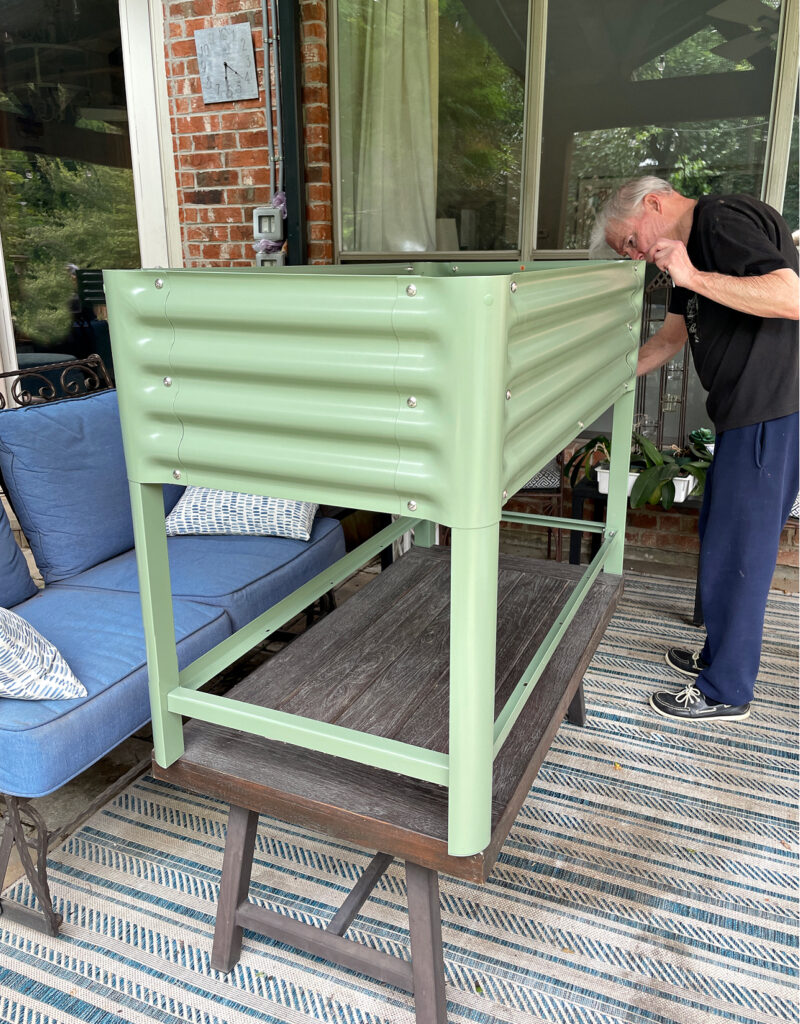
With two people,, as recommended, the garden bed can be assembled in under two hours.
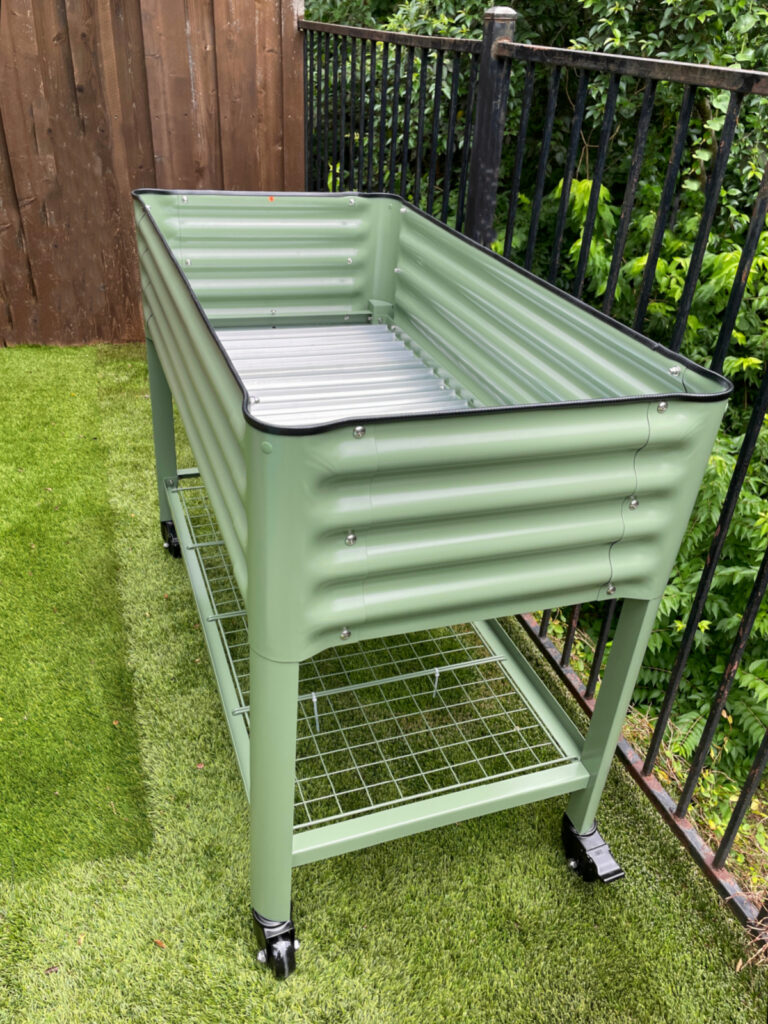
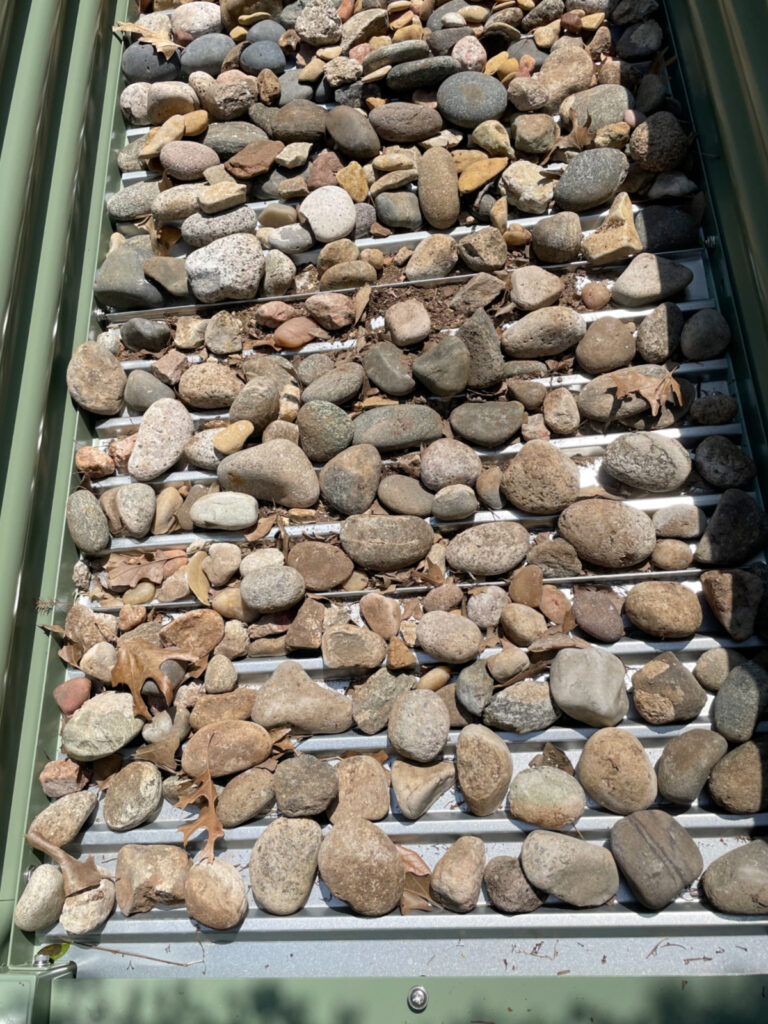
Once assembled, you should place a layer of small rocks, twigs, rotting logs, or straw. You can use a mixture. Because we have so many small river rocks on the side of our house, that is what Sweet Shark chose to use.
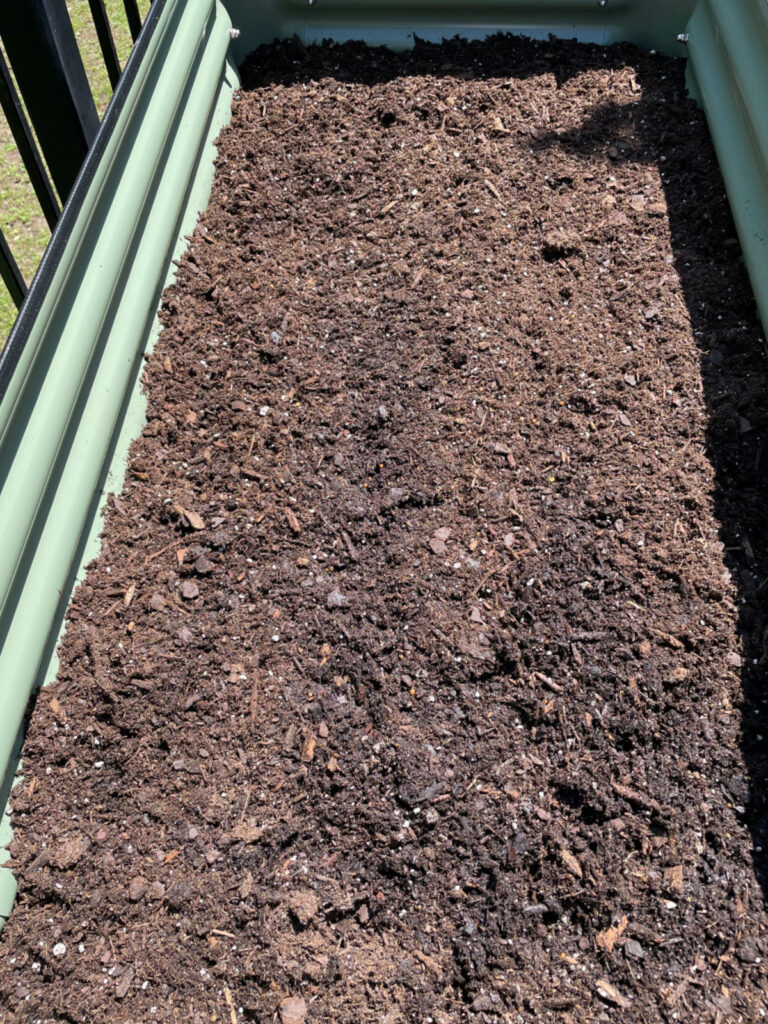
Next, place a layer of potting soil in the garden bed. Remember that the bed is 12 inches deep.
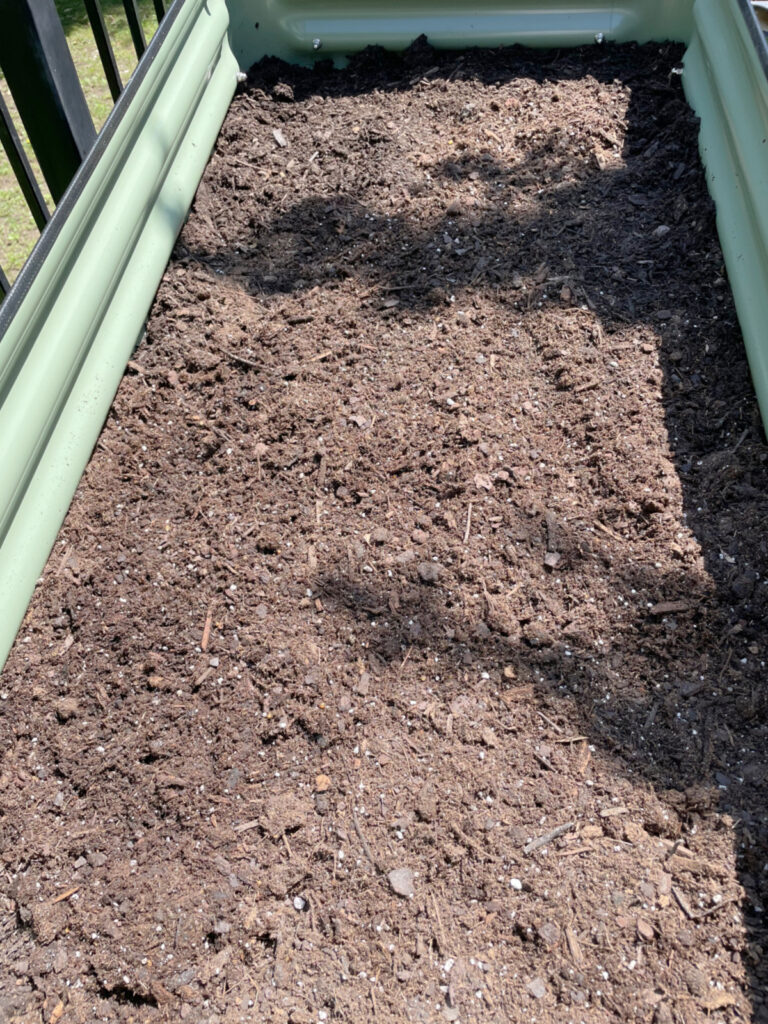
Next comes a layer of compost. This can be a “homemade” combination of grass, vegetable or fruit peels. YOu can also use store-bought compost, which is what Sweet Shark did.
The last layer is more good potting soil.
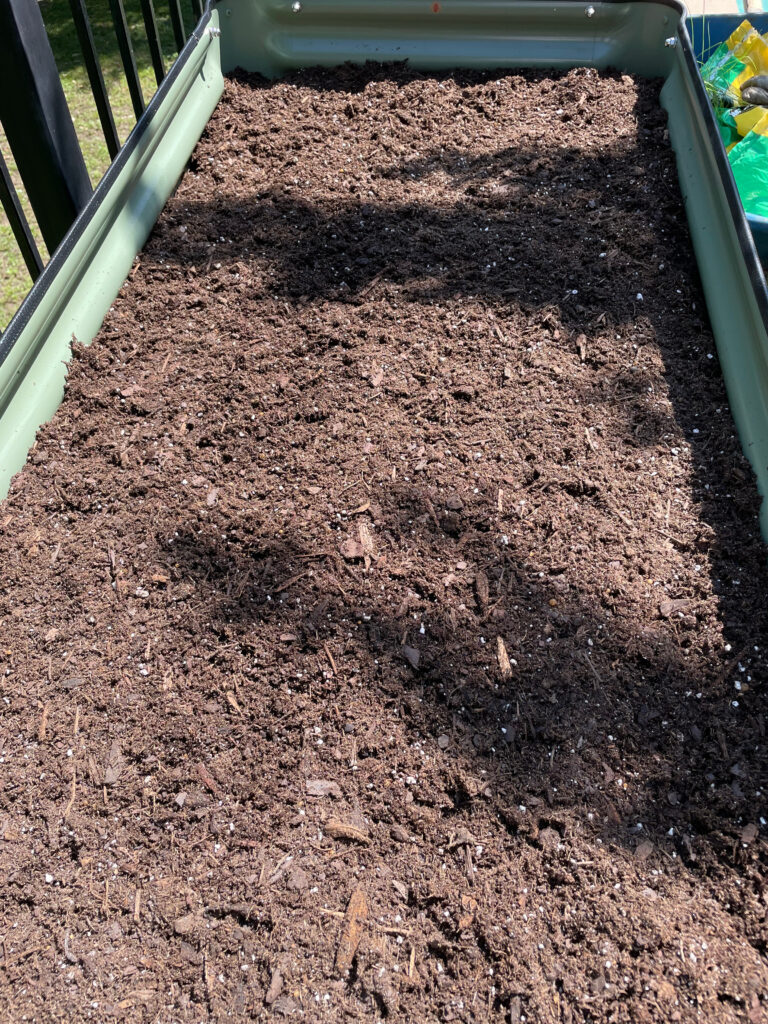
Now, you are ready to plant your herbs. It’s best to plant them several inches apart to allow for growing and spreading.
We chose to plant: front row – flat-leaf parsley, thyme, Mexican mint marigold (which is like tarragon); back row – basil, lemon chives, mint, and oregano.
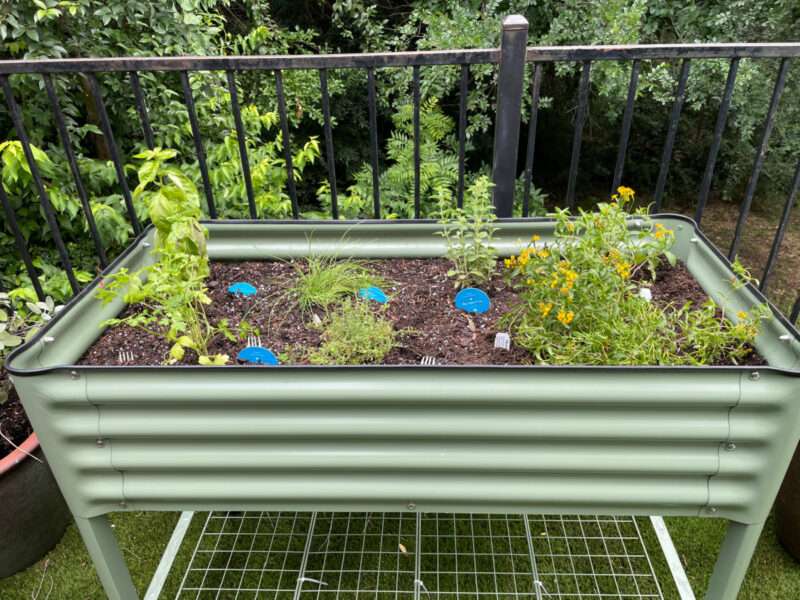
We can’t wait to see how this new system works for growing herbs in our backyard.
Hosta, Ferns, and Leopards – Oh, My
Outside our back door, behind the kitchen and seating room is a large flower bed. When we moved in the house thirteen years ago, there was nothing there except an existing Japanese Maple, a couple of hostas, and a hydrangea bush. We added another small Japanese Maple a few years ago.
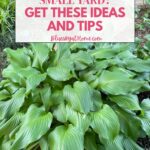
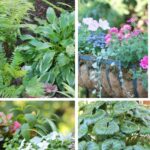
This area is in shade all day long, so it is planted in perennial greenery, such as this leopard plant. The only annuals we ever put in this area are impatiens and caladiums.
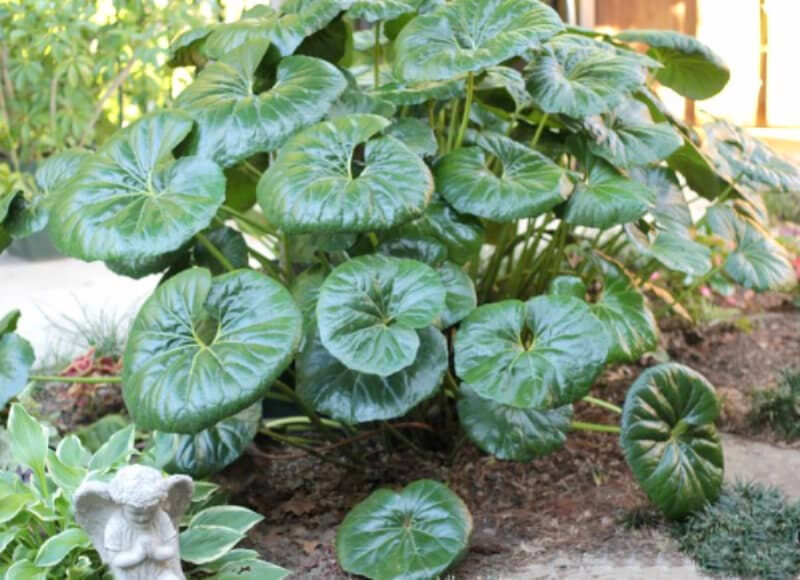
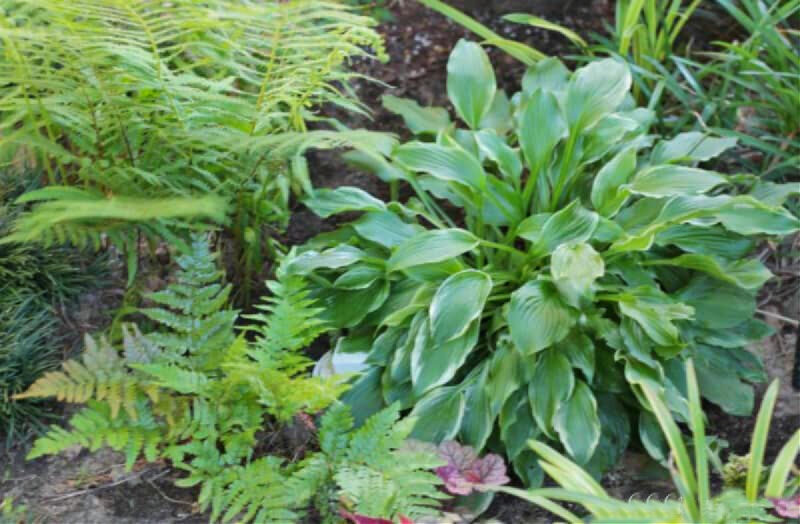
Wood ferns, hostas, and liriope fill in the plantings. All these are perennials that come back year after year. In late May to early June, Sweet Shark will plant caladium bulbs, usually in white for a great contrast with all the green foliage.
This image from a couple of years ago shows a hosta, wood ferns, and mondo grass. In a few weeks we’ll plant caladium bulbs.
The Evolution of a Hydrangea
This hydrangea was here when we moved into the house thirteen years ago, and it is the housewarming gift that keeps on giving.
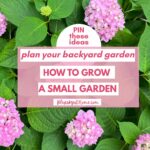
A few years ago was its most beautiful – more blooms which are pink, blue and lavender. I’ve never had a hydrangea that had different-colored blooms on the same bush.
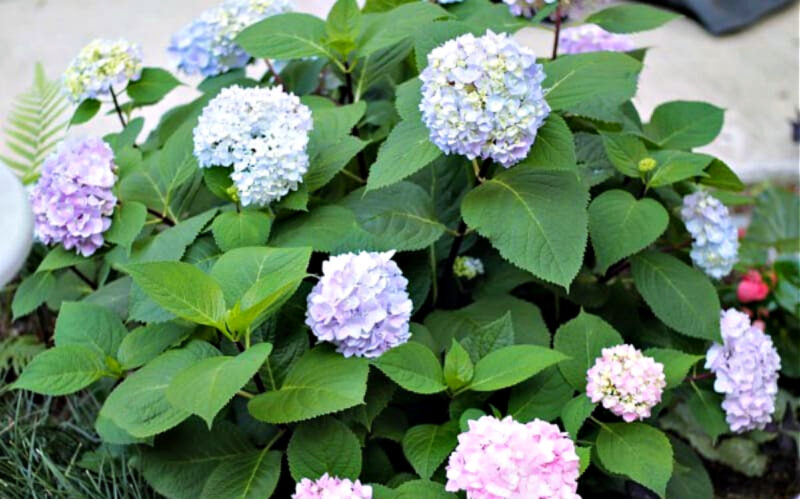
Last year, we had beautiful pink blooms. We didn’t add anything to the soil to change the color.
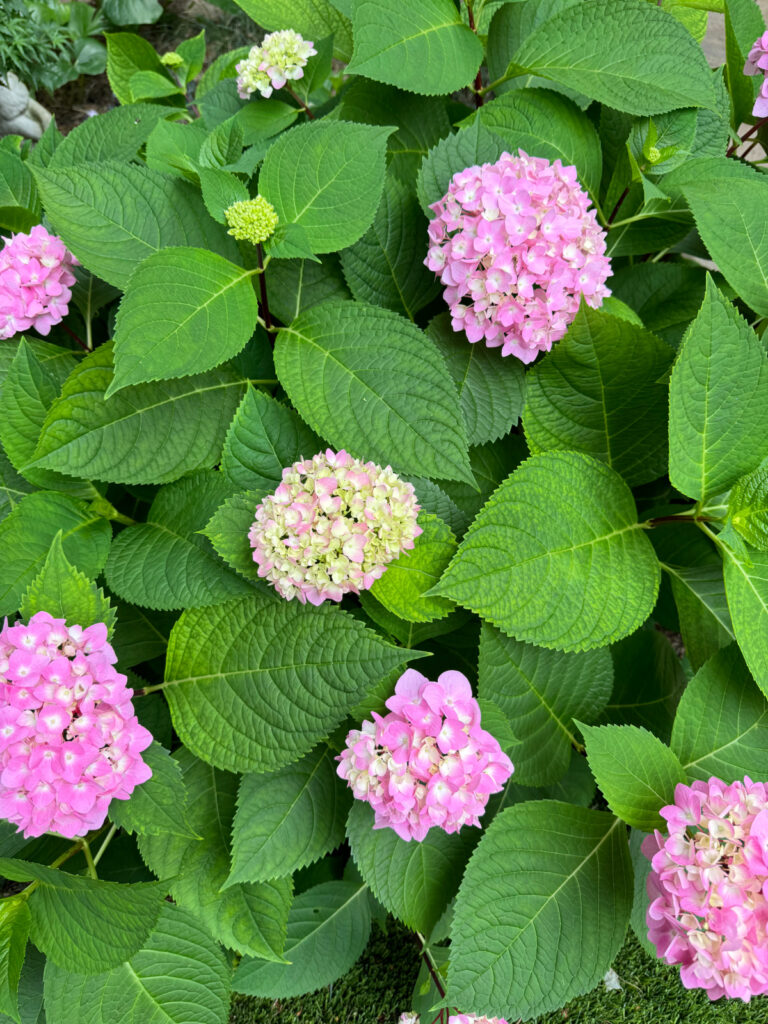
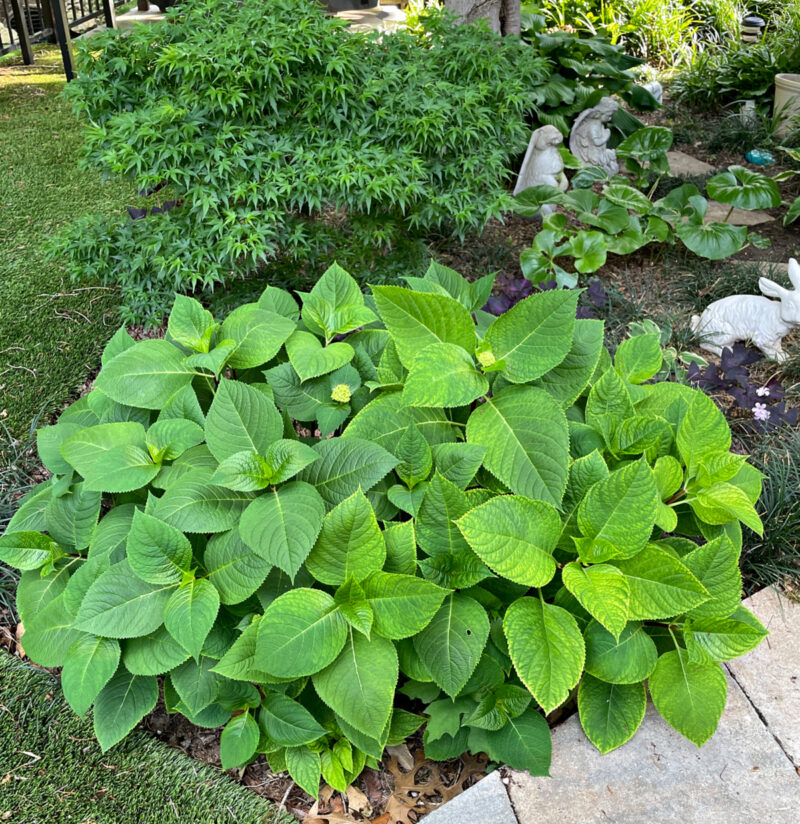
This year, the hydrangea bush now has several blooms on it.
In the background, our small Japanese Maple, the leopard plant, hostas, and ferns are thriving in spring weather. We have had warm days, cool nights, and a nice amount of rain.
My concrete bunnies and angel add a decorative touch of whimsy to the garden.
10 Tips for Creating a Beautiful Garden in a Small Space
Here are 10 tips that we have learned over the years for gardening in a small space. Small space gardening is not as hard as you may think.
- Use a variety of colors, textures, and shapes.
- Remember the “thriller, filler and spiller” rule for creating a sense of fullness to your pots and containers.
- Start small; for the best plants for small gardens, I try to find 4-inch pots. In small containers, plants still grow fast. If you start with large plants, they will take over the limited space in no time.
- Think contrast in color and texture; not just the color of the flowers, but the color of the foliage.
- Read the labels so you know the sun and water requirements.
- Put “like” plants together: those that like shade or sun, and those that need more water.
- Use a variety of containers to create interest: different materials, sizes, colors, and shapes.
- Make sure your containers have good drainage.
- It’s better to water deeply and thoroughly and less often, rather than just water the surface of the plants every day. (Caveat: in July, we sometimes have to water every day, especially if it’s windy; the heat and wind dry out the plants so quickly.)
- The best plants for small gardens are those adapted to your climate; otherwise, no matter how pretty the flowers look in the nursery, they will die, wasting your time and money.
That’s the end of the garden tour of our backyard. I hope you enjoyed it. If you have a small yard, I hope you are inspired to grow a beautiful garden in a small space.
Frequently Asked Questions About Growing a Beautiful Garden in a Small Space
Need a more concise overview of this small-space topic? This question and answer section expands and clarifies the above topic.
Start by assessing your space and identifying areas that receive sun versus shade. Divide your yard into zones based on light conditions, then choose plants that thrive in each area. Using vertical elements like hayracks, fences, and trellises will help you maximize every inch.
A mix of sun-loving and shade-tolerant plants gives you the most coverage and variety. For sunny spots, look for annuals and perennials that bloom all season. For shadier areas, ferns, hostas, and shade-loving annuals like impatiens are excellent choices.
Hostas, ferns, and leopard plants are beautiful, low-maintenance choices for shady spots. They add lush texture and greenery even where sunlight is limited, and they come back year after year.
Sun-loving plants like petunias, marigolds, zinnias, and coneflowers thrive in bright spots and provide season-long color. Pairing trailing varieties with upright bloomers creates a full, layered look.
Absolutely! Hayracks are one of the best tools for small space gardening. They mount on fences, walls, and railings to take your planting vertical, add beautiful visual interest, and work with a wide variety of flowers, herbs, and trailing plants.
Yes! Vintage planters add charm and personality to any garden. They work beautifully as focal points or accent pieces and can hold flowers, herbs, or even small ferns. The key is making sure they have adequate drainage.
Elevated garden beds are ideal for herbs like basil, rosemary, thyme, mint, parsley, and chives. They provide excellent drainage, warm up quickly in spring, and make harvesting easy. Just be sure to place your bed where it will receive at least six hours of sunlight per day.
Some of the most common issues include overwatering, poor drainage, not enough sunlight, and overcrowding. Starting with a quality potting mix, spacing plants properly, and checking soil moisture before watering will help keep your herb garden healthy.
Hydrangeas are slow to establish but incredibly rewarding over time. In the first year or two, growth may be minimal, but once established, they fill out beautifully and produce abundant blooms. Proper pruning, watering, and soil pH management will keep them thriving year after year.
The key is to think vertically, choose plants wisely, and layer textures and heights for visual interest. Mix annuals and perennials for continuous color, use containers and elevated beds to expand your planting area, and don’t be afraid to add personal touches like vintage planters or a dedicated herb garden.
Here are more garden ideas for you to check out: 13 Ideas to Create a Beautiful Flower Garden , The Ultimate Guide for Preparing Your Backyard for Spring and Summer, and 19 Herb Garden Ideas for Beginners and Experts.
Please PIN this post on how to grow a beautiful garden in a small space. Check out my Pinterest Boards: Flowers and Gardening and Outdoor Spaces.
I think I’ll head outside for another leisurely stroll. And then I think I’ll have a glass of sweet iced tea and listen to the birds singing.
Wish you were here.



This was just the information I needed! I have a very small backyard and don’t spend much time in it. Your idea about planting vertically is brilliant! When I’m done with your tips, I’ll want to spend more time in my little yard.
Your plants and flowers are gorgeous, Carol! I have a small yard, too, so I love your ideas. I’m happy to tell you I’ll be featuring this post at Thursday Favorite Things today. 🙂
Pam
anartfulmom.com
I loved the baby carriage planter. Have found something similar that looks like a tea cart. I’m a bit confused on why, how you line with chicken wire?
Debbie, thanks so much. The metal side bars of the baby carriage are really far apart and I used the chicken wire that year to keep the moss and dirt from falling out. Since then, I keep lining it with more coconut filler and that seems to work also.
So many great suggestions! Your back yard is beautiful. I’ve only recently started plantings on the patio (we are in the harsh midwest — scorching summers) but I have to be careful! Thanks for sharing at Vintage Charm! xo Kathleen
I love these ideas! I have a small container garden on my balcony, so I can definitely apply these tips to my garden. Thank you for sharing!
Your garden is pretty.
Carol, what a beautiful yard you have! It’s just gorgeous! You do such a wonderful job! Enjoy!
Mary~Ann from Canada, thank you for your nice comment and for visiting from Canada. Please drop by again.
Carol,
That Basil looks big and healthy. I love your small space containers.
Your garden is beautiful and you really have a lot of imaginative ways to use the hard space. I’ll refer back to your post.
It’s very odd not to see blooms right now—hope we have an Indian Summer to enjoy a whole summer!
Jane
Thank you so much, Jane. I hope this year’s garden is just as pretty as last year’s.
Your garden is so well thought out and planned. Everything is beautiful and what an inspiration! Thank you for sharing with us at Celebrate Your Story, and I hope you’re having a great weekend.
Sandra, when you have as little space as we do, every inch has to count. I do miss our acre lot and all the expanse of grass, but our current yard is easier to take care of.
Carol,
Your hayracks are just beautiful. Ah, hydrangeas! One day I will grow them successfully. That is very strange that your peony buds died. Maybe someone will be able to give you some clues what caused that.
Judith
Judith, thank you. Yes, I would love to know what happened to my peonies!
Beautiful!
Thanks sweet friend. A lot of work, but now we can just enjoy the rest of the spring and summer. Still have to water!
One of the prettiest gardens I’ve seen! You really do a great job.
Stacey, you are the sweetest. Hasn’t it been a beautiful spring?